Cataracts vs. Glaucoma – In Brief
- These are two completely different diseases. Cataracts affect the lens, glaucoma – the optic nerve. They are mainly linked by the fact that both occur more frequently with age.
- Cataracts are reversible. The clouded lens is replaced with an implant, and vision returns because the optic nerve itself remains intact.
- Glaucoma is irreversible. Damaged optic nerve fibers cannot be regenerated – treatment can only halt the further progression of the disease.
- Symptoms differ fundamentally: cataracts cause blurriness and fading colors in the center of the visual field; glaucoma often shows no symptoms for a long time, then narrows the visual field from the periphery. Both diseases can occur simultaneously.
- We treat cataracts surgically in Warsaw and Krakow. Glaucoma requires continuous ophthalmological care – before every cataract surgery, we assess the optic nerve and intraocular pressure. See cataract surgery in Warsaw or cataract treatment in Krakow.
Have you noticed that the world around you seems a bit dimmer? Maybe you squint more often, or feel like your glasses are perpetually dirty? The words “cataracts” or “glaucoma” can make anyone’s heart beat faster, because sight is our most important connection to the world. At SwissLaser, we believe that fear only has big eyes when we lack knowledge. Once you understand exactly what is happening in your eye, you will feel relief and know how to act to enjoy sharp vision for many years to come.
What will you learn from the text below?
- What exactly is the difference between cataracts and glaucoma? Cataracts are simply the clouding of your natural lens, while glaucoma is an insidious disease that destroys the optic nerve.
- Do both diseases give similar signals? With cataracts, the world looks as if you are looking through a fog, and glaucoma quietly “takes away” the image from the sides, leaving only the center of the visual field.
- Can you have both at once? Unfortunately, yes, and what’s more – an old, unoperated cataract can cause a dangerous spike in pressure and lead to an acute glaucoma attack.
- How do we treat these conditions today? Cataracts are simply replaced with a new lens during a short procedure, and we try to stop glaucoma with medication or a precise laser.
- How often should you visit an ophthalmologist for a check-up? If everything is fine, a visit once every two years is enough, but if you are in a risk group, we see each other annually.
Cataracts vs. Glaucoma: Two Different Conditions, One Shared Fear
Lens vs. Optic Nerve – Where Does the Problem Lie?
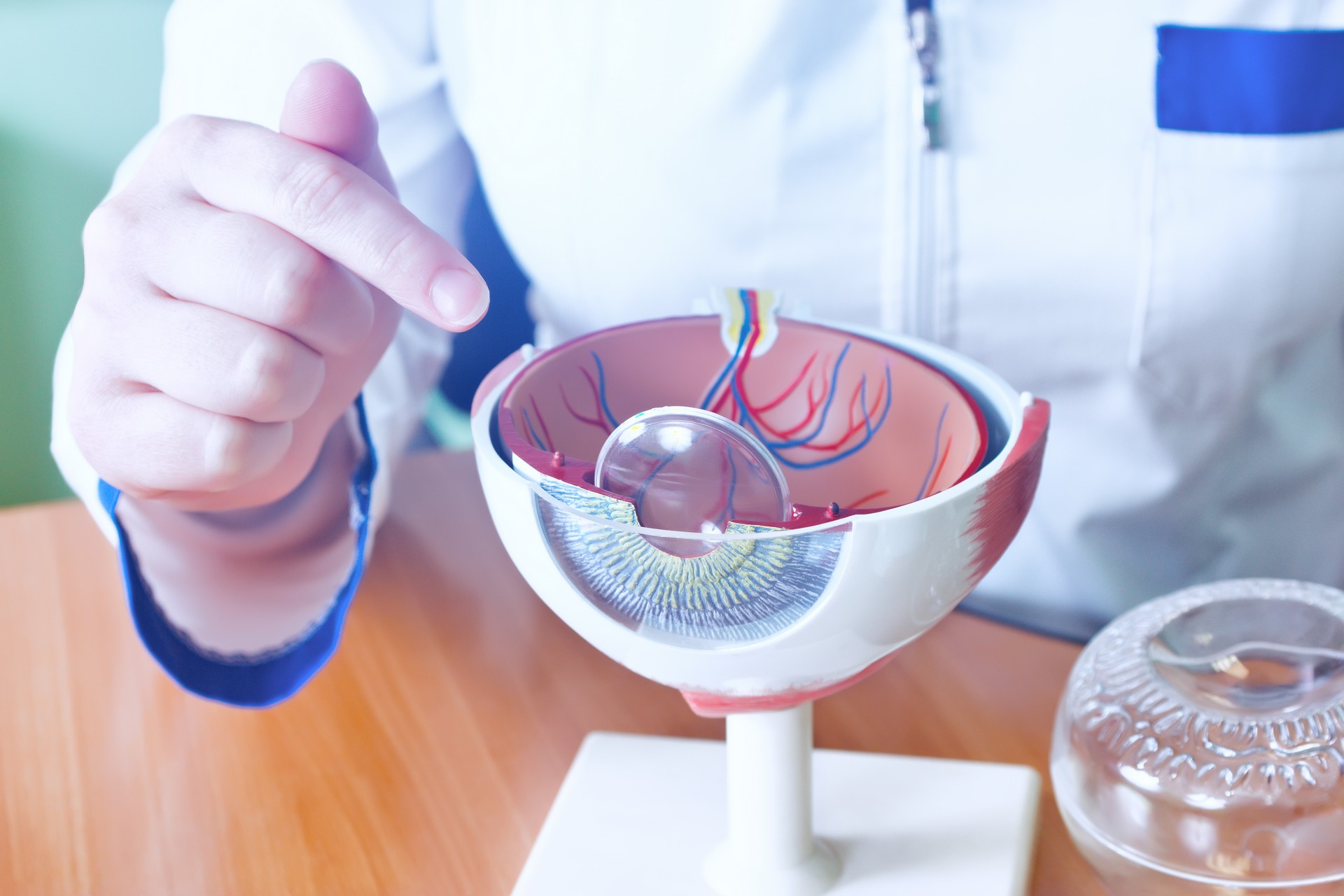
Imagine your eye is a modern camera. Cataracts are a situation where the front lens of the objective simply fogs up or gets so dirty that light can no longer pass through it. Glaucoma is a completely different story – here, the cable transmitting the image from the camera to the computer (i.e., your optic nerve) is damaged. While we can easily replace a dusty “lens” with a brand new one today, we cannot yet repair a damaged “cable.” Do you see now why every second counts with glaucoma?
Can you suffer from both diseases simultaneously?
Unfortunately, fate can be malicious, and these two diseases can go hand in hand. What’s worse, cataracts can “grow” glaucoma. How is this possible? As the lens clouds, it becomes hard and swells, causing it to push against the inside of the eyeball. As a result, it blocks the outflow of fluids, pressure rises, and suddenly… boom, we have a glaucoma attack. That’s why at SwissLaser, we always repeat: don’t wait for cataract surgery until it “matures,” because you might bring on a much more dangerous opponent.
How to Recognize the Enemy? Comparison of Symptoms
Cataract Signatures: Blurry Vision and the “Dirty Window” Effect
Cataracts are, one might say, “moody” – they envelop the world in a delicate fog. Colors suddenly fade, and night driving becomes a challenge because every streetlamp blinds you with a thousand glares. Have you ever wondered why you see better in bad weather? This is a typical sign – when the sun doesn’t glare, your pupil dilates, and the image enters, bypassing the greatest clouding in the center of the eye.
The Insidious Face of Glaucoma: From Floaters to Tunnel Vision
Glaucoma is a “silent thief.” For years, it may not cause pain or reveal its existence. Your central vision may be perfect, but slowly, inch by inch, you lose what’s happening on the sides. Before you know it, your field of vision may resemble looking through a narrow tube – this is called tunnel vision. Have you noticed strange floaters when looking at a light bulb? Or perhaps your eyes water for no reason? These could be the first, quiet calls for help.
Risk Groups and Triggering Factors
Who is Most at Risk for Primary Glaucoma?
Unfortunately, the risk increases with every candle on the cake after forty. If your loved ones have struggled with glaucoma, you have significant myopia (over 4 diopters), or your cornea is naturally thinner – you should be vigilant. This is not a cause for panic, but for more frequent visits to the clinic.
Acute Glaucoma Phase – When Eye Pain Becomes an Alarm Signal
A sudden glaucoma attack is an emergency. Imagine terrible eye and head pain, nausea, and even vomiting. The eyeball becomes hard as a stone. Many patients think it’s a migraine or poisoning, while the eye is begging for immediate pressure reduction. In such a case, every minute of delay is a risk not worth taking!
Modern Approach to Treatment in 2025
At SwissLaser, we use technology our grandparents could only dream of.
Dr. Victor Derhartunian emphasizes this at every step: “Today’s microsurgery is a masterpiece of precision. We remove cataracts in a dozen minutes, often without the use of a traditional scalpel – it is replaced by a femtosecond laser that cuts with micron accuracy. In glaucoma, instead of handfuls of pills or tiresome drops, we often use modern SLT lasers. They unblock the eye and allow patients to breathe a sigh of relief.”
Surgical Cataract Removal: Phacoemulsification and Femtosecond Laser
The process is simple: we break up the old, clouded lens (often with ultrasound) and replace it with a new, artificial one that will stay with you forever. This is one of the safest procedures in the world, and the effects are visible almost immediately.
Glaucoma Management: Pharmacology, Laser Therapy, and Traditional Surgery
We cannot reverse glaucoma, but we can effectively “put it to sleep.” We have modern drops and procedures, like trabeculectomy, which create a new pathway for fluid in the eye, lowering pressure and giving the optic nerve peace.
Frequently Asked Questions (FAQ)
1. Does cataract surgery really not hurt? Word of honor – it doesn’t hurt. Your eye receives special anesthetic drops. You might feel someone doing something to your eye, but there’s no pain.
2. Can glaucoma be cured once and for all? Unfortunately, medicine cannot do that yet – nerve damage is permanent. But the good news is that we can stop it at a stage where you can see perfectly for the rest of your life.
3. Will a carrot diet help me avoid these diseases? Healthy eating is always valuable, but carrots alone won’t dissolve cataracts or lower eye pressure. Here, we need specific medical action.
4. When can I return to work after cataract surgery? Most of our patients see a huge difference the very next morning. After two weeks, you usually forget you even had a procedure!
Do you feel your vision losing sharpness? Don’t give in to uncertainty. Visit SwissLaser in Warsaw or Krakow – we’ll check what’s going on and together we’ll make sure you see the world in full brilliance again!
5. Are cataracts and glaucoma the same?
No. Cataracts are the clouding of the eye’s lens, while glaucoma is progressive damage to the optic nerve, usually associated with elevated intraocular pressure. They differ in mechanism, symptoms, and prognosis.
6. Which disease is more dangerous – cataracts or glaucoma?
Glaucoma. Vision loss in glaucoma is permanent, whereas vision impairment in cataracts can be reversed surgically.
7. Can you have both cataracts and glaucoma simultaneously?
Yes, both diseases can coexist – which is why we always assess the optic nerve and intraocular pressure before cataract surgery.
8. How to distinguish cataract symptoms from glaucoma?
Cataracts disrupt central vision: fog appears, colors fade, glare intensifies. Glaucoma is asymptomatic for years, then narrows the visual field from the periphery – leading to “tunnel vision.”
Sources
- Liu YC, Wilkins M, Kim T, Malyugin B, Mehta JS. Cataracts. Lancet 2017;390(10094):600–612. doi:10.1016/S0140-6736(17)30544-5
- Weinreb RN, Aung T, Medeiros FA. The pathophysiology and treatment of glaucoma: a review. JAMA 2014;311(18):1901–1911. doi:10.1001/jama.2014.3192
- European Glaucoma Society. Terminology and Guidelines for Glaucoma, 5th Edition. Br J Ophthalmol 2021;105(Suppl 1):1–169. doi:10.1136/bjophthalmol-2021-egsguidelines