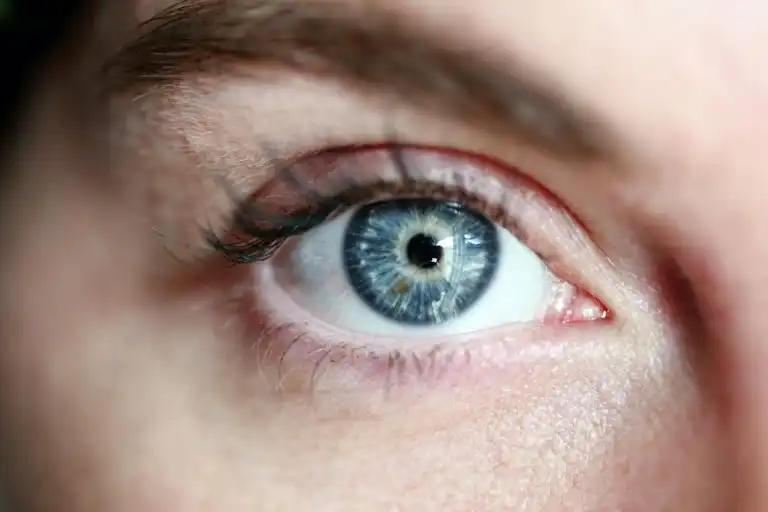
Astigmatism Symptoms – In Brief
- Typical symptoms: blurred or “stretched” vision at any distance, distorted lines, streaks and halos around lights at night, squinting, headaches, and fatigue after reading.
- Cause: the cornea (less often the lens) is shaped like a rugby ball instead of a sphere, so light focuses at two points instead of one.
- Diagnosis: refraction test and corneal topography, which rules out keratoconus; early detection in children is important, as uncorrected astigmatism can lead to amblyopia.
- Correction: glasses or toric contact lenses only alleviate symptoms; permanent correction is provided by laser vision correction, phakic IOLs, or toric IOLs during cataract surgery.
Astigmatism is a common vision defect that affects millions worldwide, often accompanying other vision problems. Although it can significantly impact visual comfort and quality of life, modern medicine offers effective and safe methods for its correction. In this article, we provide comprehensive information on astigmatism – from its causes and symptoms to modern diagnostic and treatment methods available at our clinic.
What is Astigmatism?
Astigmatism is one of the most common refractive errors, affecting approximately 30% of the population. Unlike myopia or hyperopia, which affect visual acuity depending on distance, astigmatism causes image distortion regardless of how close or far the observed object is.
Imagine looking through a slightly wavy window – the image you see is distorted. An eye with astigmatism functions similarly. While a healthy cornea has a perfectly spherical shape (like a basketball), the cornea of a person with astigmatism is irregular (more like a rugby ball). This irregularity causes light entering the eye not to focus at a single point on the retina, leading to blurred or distorted vision.
Symptoms of Astigmatism
Astigmatism can occur alone or accompany other vision defects, such as myopia or hyperopia. Its symptoms can be subtle, but over time they can significantly impact quality of life. The most common symptoms include:
- Blurred or distorted vision at any distance
- Difficulty distinguishing details, especially horizontal, vertical, or oblique lines
- Frequent squinting to improve visual acuity
- Headaches, especially after prolonged visual effort
- Rapid eye fatigue (asthenopia)
- Discomfort when working at a computer or reading
- Impaired night vision
It is worth noting that astigmatism can be difficult to detect in children, as they often do not realize their vision is abnormal. This can lead to learning difficulties, concentration problems, or reluctance to read. Therefore, regular eye examinations are essential from an early age.
Diagnosis of Astigmatism
At the SwissLaser Laser Vision Correction Clinic, astigmatism diagnosis begins with a comprehensive eye examination performed by experienced ophthalmologists. We use modern diagnostic equipment that allows us to precisely determine the type and degree of astigmatism.
Basic examinations include:
- Visual acuity test – classic Snellen chart or modern digital screens
- Keratometry – measurement of corneal curvature
- Corneal topography – detailed mapping of the corneal surface
- Autorefractometry – measurement of refractive error using a computer refractometer
- Subjective refraction test – selection of appropriate correction using a phoropter or trial frame
Our examinations are performed by a team of specialists with many years of experience, holding certifications in the diagnosis and treatment of refractive errors. Each case is analyzed individually, allowing for the selection of the optimal treatment method.
Astigmatism Correction Methods
Several effective ways exist to correct astigmatism. In our clinic, we offer both non-invasive correction methods and laser procedures tailored to the individual needs of the patient.
Eyeglass Correction
The simplest method of astigmatism correction is glasses with cylindrical or spherocylindrical lenses. These lenses compensate for the irregular shape of the cornea, allowing light to focus at a single point on the retina. This is a non-invasive method suitable for patients of all ages.
Contact Lenses
Specialized toric contact lenses are designed specifically for astigmatism correction. They are more advanced than regular spherical lenses because they must maintain proper orientation on the eye to effectively correct the defect. In our clinic, we offer professional contact lens fitting and comprehensive training on their use.
Laser Astigmatism Correction
For patients seeking a permanent solution, we offer modern methods of laser astigmatism correction:
1. LASIK Method
LASIK (Laser-Assisted In Situ Keratomileusis) is one of the most popular methods of laser vision correction. During the procedure, the surgeon creates a thin flap on the surface of the cornea, and then uses an excimer laser to reshape the deeper layers of the cornea, correcting its irregular shape. After reshaping, the flap is repositioned.
Clinical studies show that the effectiveness of LASIK in astigmatism correction is 94-96% for astigmatism up to 2 diopters, and approximately 85-90% for astigmatism above 2 diopters.
2. SmartSight Method
SmartSight is a minimally invasive micro-lenticule laser vision correction (lenticule micro-extraction) using the SCHWIND ATOS® femtosecond laser. SmartSight is a modern femtosecond laser procedure belonging to the so-called flapless methods. These involve creating a lenticule (a thin fragment of the lens within the cornea) inside the intact cornea. Then, a minimally invasive incision is made to access the corneal lenticule. Through this small opening, the intra-corneal lenticule can then be removed. Static cyclorotation compensation can also be applied.
3. Trans-PRK smart surFace Method
The Trans-PRK method is the only touchless laser vision correction method. The modern capabilities of Trans-PRK have optimized the procedure at its most crucial point. However, this applies almost exclusively to patients with myopia or astigmatism. If hyperopia is present, Trans-PRK treatment can only be successfully performed if the number of diopters is relatively low.
Qualification for Laser Astigmatism Correction
At our clinic, every patient undergoes a detailed qualification process before laser vision correction. This process includes:
- Comprehensive ophthalmological examination – assessment of overall eye health
- Detailed corneal diagnostics – measurements of corneal thickness, topography, and biomechanics
- Assessment of refractive error stability – the defect should be stable for at least one year
- Medical history – analysis of general health and coexisting diseases
Not every patient with astigmatism qualifies for laser surgery. Contraindications may include:
- Pregnancy and breastfeeding period
- Age under 18 (in most cases)
- Unstable refractive error
- Advanced eye diseases (e.g., cataracts, glaucoma, retinopathy)
- Autoimmune diseases
- Advanced dry eyes
- Cornea that is too thin
- Keratoconus
Our specialists always honestly inform patients about treatment options and potential limitations. In case of contraindications to laser vision correction, we propose alternative treatment methods.
Laser Astigmatism Correction Procedure
Before the procedure
- Preparation – soft contact lenses should be discontinued at least 7 days before the procedure (4 weeks for hard contact lenses)
- Pre-operative consultation – final qualification and detailed discussion of the procedure
- Day of the procedure – the patient should arrive without makeup, perfume, or creams
During the procedure
- Anesthesia – the procedure is performed under local anesthesia (eye drops)
- Positioning – the patient lies on a special operating chair
- Laser procedure – usually lasts a few minutes per eye
- Monitoring – the surgeon monitors the procedure in real-time
After the procedure
- Rest – a short stay in the clinic under observation (approximately 30 minutes)
- Instructions – the patient receives detailed post-operative recommendations
- Medication – prescription of anti-inflammatory and moisturizing eye drops
- Transport – the patient cannot drive after the procedure; the presence of an accompanying person is required
Post-operative Recovery
Recovery time varies depending on the method used:
- LASIK – vision improvement occurs within 24-48 hours, full vision stabilization after about a month
- SMILE – similar to LASIK, rapid vision improvement with minimal discomfort
- PRK/EPI-LASIK – the healing period is longer, full visual acuity is achieved after 1-3 months
During the recovery period, we recommend:
- Using prescribed eye drops according to schedule
- Avoiding rubbing the eyes
- Wearing sunglasses outdoors
- Avoiding eye makeup for at least 2 weeks
- Avoiding swimming pools, saunas, and strenuous physical activity for 2-4 weeks
- Regular follow-up visits
Effectiveness and Safety
Laser astigmatism correction is one of the most frequently performed ophthalmological procedures worldwide. According to data from many years of clinical studies:
- Over 95% of patients achieve 0.8 vision or better without correction
- Approximately 90% of patients no longer require glasses for daily activities
- Patient satisfaction exceeds 96%
Like any procedure, laser vision correction carries certain risks. Possible side effects include:
- Temporary dry eyes (usually resolves after a few months)
- Halo effect or glare around light sources (especially at night)
- Under-correction or over-correction of the defect (may require an additional procedure)
- Very rarely: infections or healing problems
In our clinic, the complication rate is significantly lower than the national average due to the use of modern equipment and technology, as well as the experience of our surgeons, who have performed a total of over 15,000 laser vision correction procedures.
Our Patients’ Stories
“For 15 years, I wore glasses due to astigmatism. They bothered me during sports and in daily life. After the procedure, I regained my freedom, and my quality of life significantly improved. The procedure was quick and painless, and the results exceeded my wildest expectations.” – Anna, 32 years old
“As a professional photographer, precise vision is crucial for me. Astigmatism significantly hindered my work. After the procedure at SwissLaser Clinic, I can enjoy perfect image sharpness without glasses, which constantly fogged up during shoots. This is the best investment in my profession and comfort.” – Marek, 41 years old
Myths about Laser Astigmatism Correction
Myth 1: Laser vision correction is painful
Truth: The procedure is performed under local anesthesia (eye drops) and is practically painless. Patients may only experience slight discomfort in the first few hours after the procedure.
Myth 2: The effects of the procedure are temporary
Truth: Laser vision correction provides lasting results. In a small percentage of patients (about 5-10%), a slight regression of the defect may occur, especially if the initial defect was significant.
Myth 3: The laser can damage the eye
Truth: Modern lasers used in ophthalmology are extremely precise and safe. They have numerous safety systems that minimize the risk of complications.
Myth 4: You cannot wear glasses after the procedure
Truth: After the procedure, you can wear glasses without any problem if needed, for example, in case of under-correction or progression of the defect in the future.
Why Choose Our Clinic?
At SwissLaser Laser Vision Correction Clinic, we offer:
- Experience – our team consists of certified specialists with many years of experience
- Modern technology – we use the latest generation lasers with advanced eye-tracking systems
- Comprehensive care – we provide full support before, during, and after the procedure
- Individual approach – each patient receives a personalized treatment plan
- Safety – we apply rigorous safety procedures in accordance with international standards
- Transparency – we always honestly inform about possibilities, limitations, and potential risks
Our team regularly participates in international conferences and training to provide patients with treatment in accordance with the latest medical standards.
Schedule a Consultation
If you are struggling with astigmatism and are considering laser vision correction, we invite you for a qualification consultation. Our specialists will answer all your questions and help you choose the best treatment method tailored to your individual needs.
To schedule an appointment:
- Call: +48 22 120 16 90 (Warsaw) or +48 123 833 360 (Krakow)
- Fill out the contact form on our website
- Visit our reception in person
Legal disclaimer: The information presented is for educational purposes only and does not replace medical consultation. Each case is individual, and treatment results may vary depending on many factors. Qualification for the procedure and selection of the appropriate treatment method should be made by a specialist physician after a detailed examination.
FAQ – Frequently Asked Questions
How does a person with astigmatism see?
The image is blurred or stretched in one direction at any distance: letters ‘run together’, straight lines appear curved, and at night, streetlights and headlights have streaks and ‘rays’. Additionally, there is squinting and headaches after reading.
Is astigmatism in one eye normal?
Yes, different refractive errors in both eyes are common. The problem is that the healthier eye ‘compensates’, and the defect goes unnoticed for years, and in children, it can lead to amblyopia. That’s why examining each eye separately is so important.
Can astigmatism be cured?
Astigmatism cannot be cured with eye drops or exercises, but it can be permanently corrected: with a laser, a phakic IOL, or a toric IOL implanted during cataract surgery. Glasses and toric contact lenses only correct the defect when you wear them.
Does astigmatism worsen with age?
Corneal astigmatism is usually stable from the end of growth, but after age 50, it can change with the shape of the cornea and the lens (cataracts). A sudden increase in astigmatism in a young person requires corneal topography to rule out keratoconus.
Sources and Bibliography
- American Academy of Ophthalmology. (2022). Refractive Errors. Preferred Practice Pattern.
- Alió JL, et al. (2021). Management of astigmatism in cataract and refractive surgery. International Journal of Ophthalmology, 14(7), 1058-1071.
- European Society of Cataract and Refractive Surgeons. (2022). Guidelines for refractive surgery procedures.
- Ganesh S, Brar S, Pawar A. (2020). Results of Small Incision Lenticule Extraction in patients with high astigmatism. Journal of Refractive Surgery, 36(12), 796-803.
- Polish Ophthalmological Society. (2022). Guidelines for the management of refractive errors and accommodation disorders.