Hyperopia – in brief
- A farsighted person has pluses: hyperopia is corrected with converging lenses of positive power; myopia – with negative ones.
- Symptoms: eye fatigue and headaches when reading, blurred near vision, strabismus in children and reluctance to read; with a higher defect, also worse distance vision.
- The defect does not worsen, but reveals itself: after the age of 40, accommodation, which masked it, weakens – hence the sudden need for glasses.
- Correction: laser (usually up to about +4 D), for a higher defect or after the age of 45, refractive lens exchange or phakic lens – the method is decided by qualification.
Do you have farsightedness and often hear: “But you’re lucky, you can see far clearly!”? Stop! We must say it directly: the colloquial name for this defect – hyperopia – is extremely misleading and may falsely reassure you. Why? Because it’s not such a simple defect at all! In reality, it is more complicated than popular nearsightedness, and over time it can ruin your visual comfort at any distance. At Swisslaser clinics in Warsaw and Krakow, we believe you deserve the full truth and the best solutions. That’s why we explain what really threatens your eyes and how laser vision correction can give you lasting, crystal-clear vision.
What will you learn from the text below?
- Does the name “farsightedness” fully describe the problem? Not at all; this name is misleading, because eventually you often start having problems seeing clearly even at a distance.
- What is the role of the accommodation mechanism in this defect? You constantly force accommodation to see clearly, but it’s like driving with the clutch constantly engaged – you quickly wear out your eyes.
- At what age does the vision crisis appear in farsighted people? Although you managed to avoid glasses, around the age of 30 or 40, accommodation gives up, and you see poorly both up close and far away.
- What are the most serious consequences of untreated hyperopia? Chronic eye fatigue, terrible headaches, and in the worst-case scenario, even amblyopia – it’s worth taking seriously.
- Is laser correction effective for hyperopia? Of course, a laser (especially FemtoLASIK) reshapes the cornea to permanently fix the light refraction problem, giving you sharper vision.
Hyperopia (farsightedness): Debunking myths and indicating effective laser corrections
Hyperopia – a defect more complicated than the name suggests
Many people think: farsightedness only means reading glasses. This is a very dangerous stereotype! This defect can strain your vision for years, giving you no moment of respite.
- Why the name “farsightedness” is misleading: Unlike myopia, which is straightforward, hyperopia is insidious. Eventually, you stop seeing clearly at any distance, even though the name suggests otherwise.
- The crucial role of the accommodation mechanism: In your eye, the image naturally falls behind the retina, not on it. And what does your clever brain do? It constantly tells your eye muscles to force accommodation (i.e., focusing). Thanks to this, you trick the defect and see clearly, but this constant, unnatural tension wears you out.
- Vision crisis and consequences of accommodation overuse: This accommodation mechanism is like a battery – it will eventually run out! Although you managed to avoid glasses for years, usually around the age of 30-40, the moment of truth arrives. Accommodation weakens, and you suddenly see poorly both up close and far away. A failure.
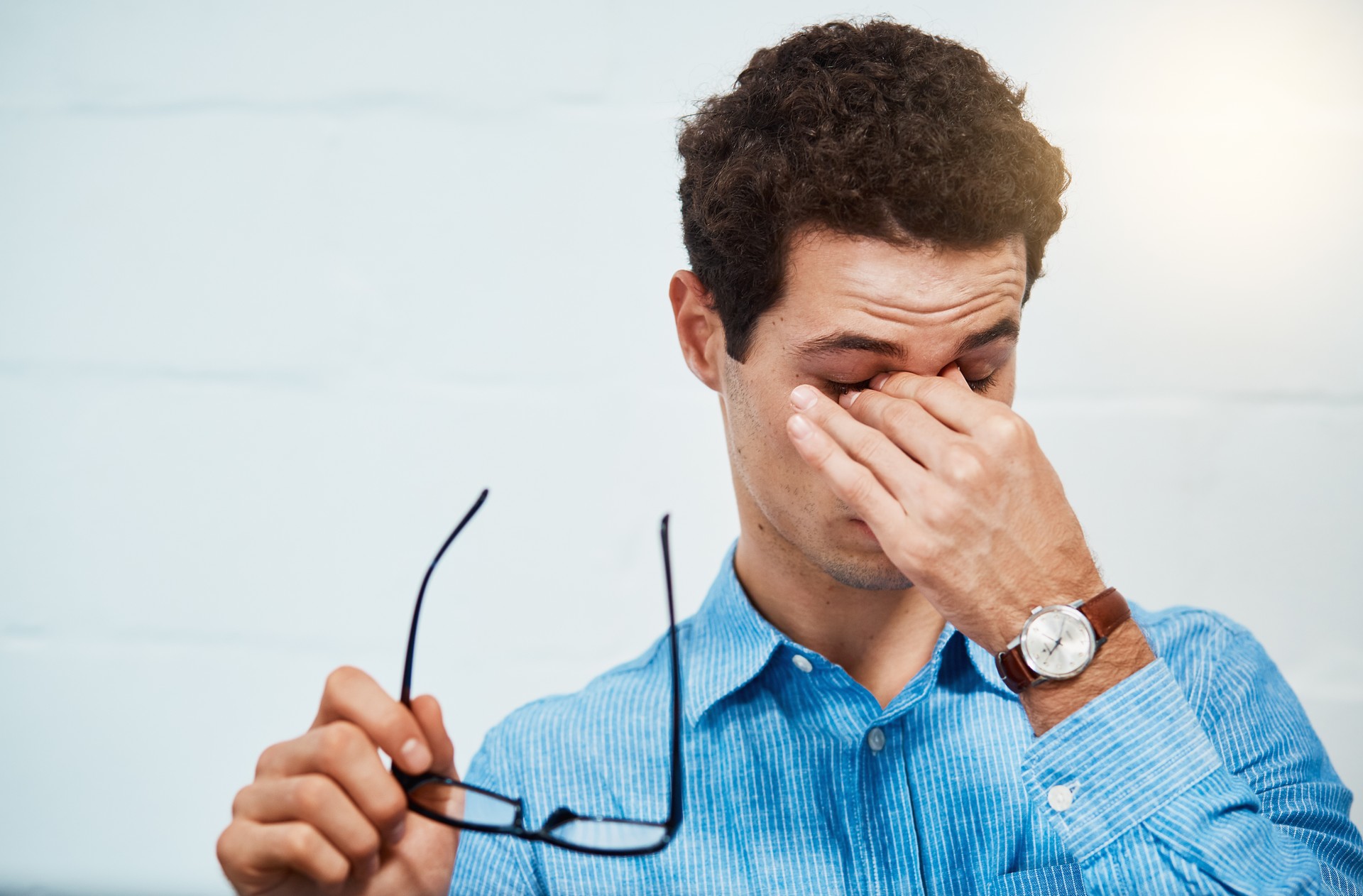
- Additional problems associated with hyperopia: This continuous effort, known as asthenopia, manifests unpleasantly: constant eye fatigue, headache (often throbbing), burning, and tearing. In children, it can even lead to strabismus. In the worst-case scenario, with a very high defect, amblyopia appears.
Diagnosis and classification of vision defects
Hyperopia is not one problem, but a whole spectrum. We need to know what “power” we are dealing with.
- Classification of hyperopia by defect magnitude: We divide it into:
- Low: up to +2.5 D
- Medium: from +2.5 D to +6.0 D
- High: above +6.0 D
- Amblyopia as the most serious complication: Know that a high, uncorrected defect can result in amblyopia. What does this mean? That even the best correction cannot improve your visual acuity. This is what we want to avoid.
Laser correction of hyperopia – modern solutions
Great news! Laser vision correction gives us a tool for a permanent solution to the problem of hyperopia.
- Principle of laser action in hyperopia: We target the source of the problem. The laser reshapes your cornea to give it greater curvature. This, in turn, increases the refractive power of light, and the image finally hits the retina perfectly.
- The LASIK method: This is a classic. The surgeon cuts the cornea with a scalpel (microkeratome), creates a flap, and then the laser reshapes the exposed surface.
- The FemtoLASIK method: And this is high-tech. We use a femtosecond laser to create an ultra-thin flap. Why is this better? It’s safer, more precise, and minimizes the risk of injury. This is the technique we most often recommend.
- Impact of the method on visual comfort: Regardless of the technique, the effect is the same: we improve acuity and permanently free your eyes from this murderous accommodative effort.
- Individual method selection: The number of diopters matters! The method is always determined individually after a thorough examination. There’s no room for guesswork here.
Dr. Victor Derhartunian on treating farsightedness: “In the case of hyperopia, it is crucial not to wait. It is said that a farsighted person sees well. This is true, but this effort destroys their quality of life. Laser, especially FemtoLASIK, allows us to reshape the cornea with exceptional precision and permanence. We eliminate the problem at its source before strabismus, asthenopia, or, worse, amblyopia develops. This is an investment in lifelong health.”
Case Study: Saying Goodbye to Headaches
Mr. Piotr (38 years old, Warsaw), farsighted (+3.0 D), never wore glasses permanently. However, he regularly suffered from terrible headaches, and working at the computer was torture.
Patient’s statement: “I convinced myself that these headaches were from stress, and my eyes were tearing up from the air conditioning. Only at Swisslaser did I hear the truth: it was asthenopia caused by my eyes constantly straining. I chose FemtoLASIK. The procedure itself was quick. The biggest change? The headaches disappeared. They just disappeared. For the first time, I feel that my eyes are fully relaxed, and I see equally clearly at any distance. I couldn’t have made a better decision.”
FAQ – Frequently Asked Questions
Will laser correction cure my hyperopia forever?
Yes, the laser permanently changes the shape of the cornea. But beware: presbyopia (i.e., the reading problem that affects everyone after 40) is a separate process that the laser does not affect.
Can everyone with a high defect above +6.0 D have laser surgery?
A high defect is not an automatic “no,” but it requires a very, very thorough assessment. Sometimes, for extremely high defects, we must propose Refractive Lens Exchange instead of laser. The doctor will explain this to you during qualification.
Is the FemtoLASIK method safer than traditional LASIK (with a microkeratome)?
Generally, yes. Using a femtosecond laser to create the flap is much more precise and minimizes the risk of complications that sometimes occurred with the mechanical use of a scalpel. We recommend it as the gold standard.
How do I know if I suffer from asthenopia?
If you have uncorrected hyperopia and feel constant, increasing eye fatigue, experience headaches (especially in the evening) or burning after working at the computer, it is most likely asthenopia. It’s time to check it out!
Does FemtoLASIK hurt?
No, absolutely not. The procedure is performed under local anesthesia (drops) and is painless. You may only feel a slight pressure or a momentary “strange” sensation.
Does a farsighted person have pluses or minuses?
Pluses. Hyperopia is corrected with converging lenses of positive power (e.g., +2.0 D), and myopia – with negative ones. If you see a “+” sign on your prescription, you are farsighted, although with a low defect, you may not feel the need for glasses at all until the age of 40.
Does hyperopia worsen with age?
The defect itself usually does not increase, but with age, the accommodation that masked it weakens. That’s why a farsighted person after the age of 40 suddenly needs glasses – first for reading, then also for distance. This is not a new defect, but the end of “hiding” an old one.
How does hyperopia differ from presbyopia?
Hyperopia is a defect in the eye’s structure (too short eyeball or too flat cornea), present from birth. Presbyopia is the loss of lens elasticity after the age of 40, which affects everyone. A farsighted person experiences it earlier and more intensely because both defects add up.
Can hyperopia be removed with a laser?
Yes, hyperopia is usually corrected with a laser up to about +4 D (FemtoLASIK, more in selected cases). For a higher defect or after the age of 45, refractive lens exchange or a phakic lens is a better solution. The method is decided by a qualification examination.