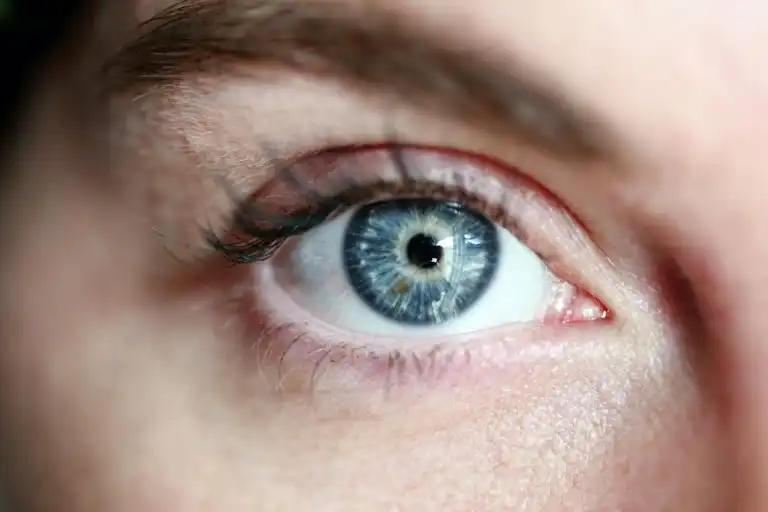
FemtoLASIK or ReLEx SMILE – in brief
- FemtoLASIK: femtosecond laser creates a corneal flap, excimer laser reshapes the defect; fastest recovery of vision (hours), also corrects hyperopia.
- ReLEx SMILE / SmartSight: flapless – laser cuts a thin lens (lenticule) in the cornea, removed through a 2–3 mm incision; less dry eye, greater corneal stability. At SwissLaser, we use SmartSight Nova.
- There is no single best method for everyone: the choice depends on corneal topography and thickness, type and size of the defect, dry eye, and lifestyle (contact sports).
- Price and guarantee: current prices for both methods in the laser vision correction price list; the price includes a package of post-operative check-ups, a guarantee of up to 5 years, and installment payment options.
You are with us at Swisslaser, whether in Warsaw or Krakow, and one big question is swirling in your head: which method is best for me? FemtoLASIK or ReLEx® SMILE? I know the internet bombards you with information, and instead of feeling more confident, you have even more doubts. Maybe friends are advising you, maybe you’re reading anonymous forums. But the truth is, it’s not virtual advice, but the experience and knowledge of your refractive surgeon that are most important. It is we, the specialists, who, based on precise examinations, choose the ideal solution. This article is our guide – let’s clear your mind and explain everything thoroughly.
What will you learn from the text below?
- What is crucial in deciding on the procedure? Always trust your doctor – unlike online opinions, they have full knowledge and experience necessary to choose the optimal method for your eyes.
- How is Laser Vision Correction performed? It’s a two-stage masterpiece: first, a femtosecond laser creates a precise flap, and then an excimer laser reshapes your cornea.
- What makes ReLEx® SMILE unique? Think of it as a “keyhole” method – it’s minimally invasive because it avoids creating a large corneal flap.
- Which method is more precise for irregular astigmatism? Clinical studies clearly show that FemtoLASIK offers higher, more flexible precision, especially in correcting complex defects and subtle higher-order aberrations.
- Can I repeat the procedure if the defect returns? FemtoLASIK gives you this chance: the procedure can be repeated multiple times. ReLEx® SMILE, unfortunately, does not offer this possibility.
Eye Anatomy and Fundamentals of Refractive Procedures
Cornea: Key element and target of correction
Let’s start with the basics: what exactly are we correcting? It’s the cornea – an absolutely amazing part of your eye. You need to know that it “does the work” because it accounts for two-thirds of the total optical power (about 42 out of 60 diopters). To finally get rid of the defect, our surgeon must precisely intervene in its stroma and change its shape.
Corneal layers and epithelial regeneration process
The cornea consists of six layers. And here’s an interesting fact! Its outer layer, the epithelium, is the fastest regenerating tissue in your body. It completely replaces cells in just one week! That’s why it’s so important that modern methods (like FemtoLASIK and SMILE) respect this process, and we, surgeons, minimize interference with it.
How correction works: Changing corneal thickness and curvature
You already know that the cornea’s power lies in its shape. And for you to see clearly, we simply need to correct that shape, meaning gently change its thickness and curvature. To do this, the refractive surgeon must access the inside – the stroma.
FemtoLASIK Method (Femto-Laser-Assisted in situ Keratomileusis)
Evolution and Acceptance: From LASIK to FemtoLASIK
History comes full circle, but it moves forward. The LASIK method has been with us for years and is the surgical gold standard. As early as 1999, the FDA (the American Food and Drug Administration) confirmed its effectiveness. Today, we have its best version – FemtoLASIK, which introduced unprecedented precision to the procedure.
Procedure process: Femtosecond laser and corneal flap (flap)
How does it work? The procedure begins with a femtosecond laser. Imagine it as a surgical micromachine that, in the blink of an eye, creates a thin, perfectly smooth corneal flap (we call it a flap), just 90-130 $mu$m thick. It opens the way for us.
Role of the excimer laser and ablation
Once the flap is gently lifted, the second, excimer laser, comes into action. Its task is to “sculpt” – it performs ablation, reshaping the cornea in its deeper part. The entire process is computer-guided, implementing a plan tailored to your eye.
Precision and safety: Use of the Eye-Tracker system
You often ask: “What if I move?”. This is where our ace in the hole comes in: an advanced Eye-Tracker system! It’s a multi-dimensional sensor that tracks every, even the slightest, movement of your eye and compensates for it in real-time. Fear of eyeball movement? You can throw it out the window!
Patient qualification: Vision defects corrected by FemtoLASIK
FemtoLASIK is truly versatile. If you have:
- Myopia up to -10 diopters
- Hyperopia up to +4 diopters
- Astigmatism up to 6 diopters
- Or even complicated higher-order aberrations
…most likely, FemtoLASIK will be ideal for you.
Statement by Dr. Victor Derhartunian:
“In our work, we are not guided by trends. We always base our decisions on the patient’s anatomy and needs. FemtoLASIK, by giving us full control over flap creation and correction profile, remains the most accurate and flexible platform for us. We use it where every micrometer counts – especially for complex astigmatism. And most importantly, this method allows us to perform re-correction in the future if needed. This is key to long-term safety.”
ReLEx® SMILE Method (Small Incision Lenticule Extraction)
Next Generation: History and Technology (Carl Zeiss)
Many see the future of correction in ReLEx® SMILE (backed by Carl Zeiss). It’s a newer technique that appeared in 2011.
“Keyhole” procedure: Minimal invasiveness and no flap
This method has earned the nickname “keyhole”, and very aptly so. Why? Because it doesn’t require creating a large flap. It’s a minimally invasive procedure that requires only a small incision.
Procedure process: Removing the microsoczewka (lenticule)
Everything happens with a single laser – the VisuMax® femtosecond laser. The laser cuts a miniature microsoczewka (lenticule) containing the vision defect inside the cornea. Then, the surgeon gently removes it through that small incision. Less intervention means a faster healing process.
Patient qualification: Range of vision defects corrected
SMILE has its limitations. It works best for people with:
- Myopia from -0.5 to -10 diopters
- Astigmatism up to -5.0 diopters
If you have significant hyperopia, ReLEx® SMILE will not be for you.
Key Differences and Comparison FemtoLASIK vs. ReLEx® SMILE
| Feature | FemtoLASIK | ReLEx® SMILE |
| Number of lasers | Two (Femto + Excimer) – full ablation control | One (Femtosecond VisuMax) |
| Corneal flap | Flap created | No flap created (only small incision) |
| Possibility of re-correction | YES – we can repeat the procedure by reopening the original flap | NO – re-correction requires another method (e.g., LASEK/PRK) |
| Eye-Tracking system | YES – we track every movement of your eye | NO – requires ideal patient stability |
| Hyperopia correction | YES (up to +4 D) | NO |
| Precision in astigmatism | High – possibility of correcting irregular defects (topo-guided) | Limited |
| Speed of vision acuity | Usually faster (93% full acuity after 3 months) | May be slightly slower (below 80% full acuity after 3 months) |
Scientific Data and Post-operative Results (According to FDA Studies)
Do you think one method is safer than the other? Let’s look at the science! FDA studies from 2017 provide us with hard evidence:
Speed of Regeneration and Visual Acuity in the Short Term
Although ReLEx® SMILE involves a smaller wound, paradoxically, the cornea heals faster after FemtoLASIK! After 3 months post-procedure, as many as 93% of patients after FemtoLASIK already had full acuity without glasses, while for SMILE it was slightly below 80%. Ultimately, after a longer period, both methods yield comparable final results.
Risk of Vision Loss: Safety of both methods
Most importantly – studies clearly show that both FemtoLASIK and ReLEx® SMILE do not carry the risk of vision loss or any significant, long-term threat to your eye health.
Frequently Asked Questions (FAQ)
Is FemtoLASIK safer than ReLEx® SMILE?
You know what? Both are at a safety level supported by years of research and numerous certifications. The difference is not in WHETHER they are safe, but in WHAT DEFECTS they correct and in the flexibility that FemtoLASIK offers through the possibility of re-correction.
How long does recovery take after the procedure?
After FemtoLASIK, visual acuity returns very quickly – discomfort usually subsides within 2 to 6 hours. After ReLEx® SMILE, the incision heals faster, but full, optimal visual acuity may appear somewhat slower.
Since SMILE doesn’t create a flap, is the cornea stronger?
That used to be the main argument for SMILE. But biomechanical studies have shown us that, unfortunately, the cornea is weakened to the same extent by both methods. So that argument is no longer decisive.
Can I qualify for both methods if I only have myopia?
Probably yes! However, if in addition to myopia you have hyperopia (farsightedness) or complicated astigmatism, then FemtoLASIK will turn out to be the only or best method for you. That’s why precise preliminary examinations are so important.
Can I accidentally move my eye during FemtoLASIK surgery?
Don’t worry, that’s a natural concern! But in FemtoLASIK, the Eye-Tracker monitors everything. Even if your eye twitches minimally, the laser will correct it. This ensures the precision of the procedure.
We are here to help you make the best decision of your life. Do you want to find out which method is perfectly suited for your eyes? Call us and schedule a precise qualification consultation at Swisslaser in Warsaw or Krakow.
Ready to see the world without limitations?
Which laser vision correction method is best?
There is no single best – there is a best for a specific eye. FemtoLASIK offers the fastest vision recovery and also corrects hyperopia; SmartSight/SMILE does not create a flap, so it works better for dry eye, contact sports, and higher myopia; EBK and LASEK are chosen for thin corneas. The choice depends on corneal topography and thickness.
What are the disadvantages of FemtoLASIK?
Corneal flap: for several weeks, rubbing the eye and contact sports must be avoided, and dry eye after the procedure is sometimes slightly more frequent and longer than after flapless methods. FemtoLASIK also requires a sufficiently thick cornea. The advantages are very fast acuity recovery and the possibility of hyperopia correction.
What is the most modern method of laser vision correction?
Flapless lenticular methods: ReLEx SMILE and its newer variant SmartSight on the Schwind ATOS laser, which we use at SwissLaser. A femtosecond laser cuts a thin lens (lenticule) in the cornea, removed through a 2–3 mm incision – without a flap, while maintaining corneal stability.
How much does FemtoLASIK cost, and how much does SMILE cost?
You can find the current prices for both methods in the SwissLaser laser vision correction price list. The price includes a package of post-operative check-ups, laser procedures are covered by a guarantee of up to 5 years, and payment can be spread over installments.