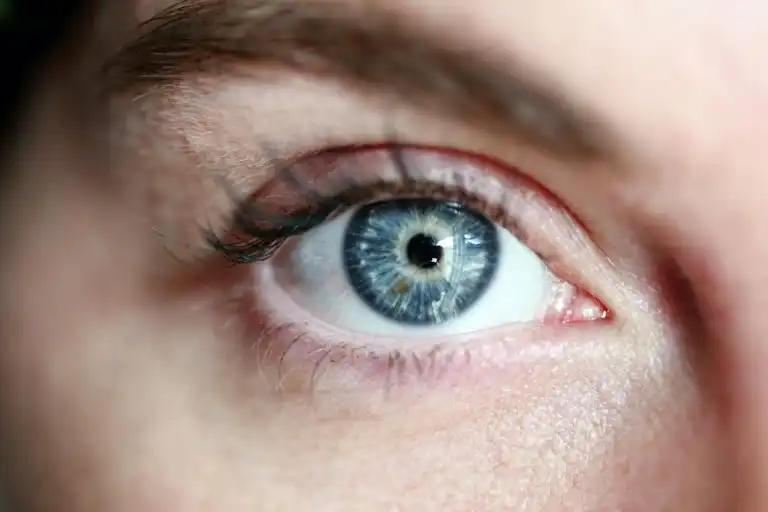
Have you ever wondered why, in a professional clinic, one person begins your examination and another finishes it? Choosing the right specialist can be confusing, because although both deal with your eyes, their roles are completely different. Imagine that your vision is a complex, precision system. In such a setup, the ophthalmologist is the “mechanic” who repairs and treats, while the optometrist is the “precision engineer.” The latter ensures that the entire mechanism runs ideally smoothly and without any hitches. At Swisslaser in Warsaw and our facility offering laser vision correction in Krakow, these specialists work as one team—all so you can enjoy crystal-clear vision.
What Will You Learn from the Text Below?
- Who exactly is an optometrist?A qualified expert who measures refractive errors and masterfully prescribes eyeglasses and contact lenses.
- How do they differ from an ophthalmologist?An ophthalmologist focuses on treating diseases and performing surgery, whereas an optometrist optimizes the process of vision and conducts vision rehabilitation.
- What examinations will an optometrist perform at the clinic?They will carry out precise measurements, such as biometry or OCT tomography, without which we cannot prepare you for laser surgery.
- When is it worth taking your child to a pediatric optometrist?This is the best choice if you notice problems with eye coordination in your little one or the need for initial correction.
- Can an optometrist detect serious diseases?Yes, they can diagnose early symptoms of cataracts or glaucoma and immediately refer you to a medical specialist.
Who Is an Optometrist and Why Is It Worth Visiting Their Office?
Many patients ask us at the entrance: “Is this a doctor?” The answer is: no, but this is a key medical profession. An optometrist is a true expert in the physics of vision. If your eyes are healthy but the image still seems blurred, this is precisely the person who will find the ideal solution for you.
History and Education: How Did Optometry Develop in Poland?
Did you know that the first Polish Department of Optometry was established as early as 1983 in Poznań? This is not a new trend, although the field has recently been experiencing a real renaissance. Today’s specialists complete demanding studies at physics faculties or medical universities. As a result, they know absolutely everything about how light enters your eye and how your brain converts it into an image.
NO and PTOO – How to Verify Your Specialist’s Credentials?
When choosing a professional, simply ask them about their Optometrist Number (NO). If they belong to the Polish Society of Optometry and Optics (PTOO), you can be certain that you are in the hands of someone who continually trains. Would you entrust your vision to someone who does not keep up with modern standards?
Optometrist vs. Ophthalmologist: Key Differences You Must Know
Put simply: an ophthalmologist treats inflammation, prescribes medications, and operates on cataracts. An optometrist, on the other hand, “fine-tunes the focus.” If you need perfect progressive lenses or toric contact lenses, this is the person who will spend considerable time with you to adjust the diopters with precision down to a fraction.
Broad Scope of Competence: What Can an Optometrist Do?
This is a far more interesting figure than just someone who performs “computerized vision testing.” The scope of their work can be surprising.
Prescribing Correction: Eyeglasses, Contact Lenses, and Prisms
Fitting good eyeglasses is a true art. An optometrist checks not only the refractive error itself but also how your eyes work together as a team. Thanks to this, you will forget about headaches or burning eyes, which so often result from poorly fitted “specs.”
Vision Rehabilitation and Eye Exercises – Not Just for Children
Have you experienced letters “swimming” while reading, even though you have good eyeglasses? The cause may be an accommodation problem. An optometrist will design a special training program for you that will strengthen your eye muscles and restore their former efficiency.
Screening Diagnostics: Detecting Cataracts, Glaucoma, and AMD
Although an optometrist will not prescribe you an antibiotic, during the examination they see the first warning signs. They are often the first to notice changes in the macula (AMD) or elevated intraocular pressure. Such rapid diagnosis allows us to initiate ophthalmic treatment immediately.
Clinical Optometrist: Your Support in Eye Surgery
At Swisslaser, the clinical optometrist is the surgeon’s right hand. Without their precise calculations, no operation—whether laser or refractive lens exchange—would be as effective.
Qualifying Examinations for Laser Vision Correction
Before Dr. Victor Derhartunian even considers activating the laser, the optometrist performs dozens of meticulous measurements. They create a digital “map” of your eye, on which we base the entire procedure.
Advanced Equipment: OCT, Corneal Topography, and Biometry
Devices such as the Clarus 500 require an expert hand. The optometrist analyzes cross-sections of your eye, performing OCT examination of the eye and detailed corneal topography. A comprehensive qualifying examination also requires precise ocular biometry, which measures the parameters of the eyeball down to the micron.
Calculating Lens Power Before Cataract Surgery
This is one of the most responsible tasks in the entire clinic. For the surgery to be successful, the optometrist must perform precise keratometry—measurement of corneal curvature. An important element is also tonometry, used to measure intraocular pressure. Dr. Victor Derhartunian often says:
“The collaboration between surgeon and optometrist is the foundation of Swisslaser. While I focus on performing the procedure perfectly, my team ensures that the lens parameters fit your lifestyle like a glove.”
Specialized Optometry: Care for Children and Seniors
The patient’s age changes everything, which is why we have two different approaches.
Pediatric Optometry – Care for the Youngest Patients
Children rarely complain about their vision—they simply think that is how the world looks. A pediatric optometrist can detect a wandering eye (strabismus) or school concentration problems through play, which adults often mistake for lack of motivation to learn.
Geriatric Optometry and Monitoring Age-Related Changes
In seniors, it is crucial to identify the moment when a cataract begins to threaten safety, for example while driving. The optometrist monitors these changes and tells us precisely when the time has come for a surgical consultation.
FAQ – Frequently Asked Questions
1. Can an optometrist write me a prescription for medication?
Unfortunately not. An optometrist is not a medical doctor, so they cannot prescribe antibiotics or steroids. However, they can easily issue a prescription for eyeglasses or contact lenses.
2. Does an examination with an optometrist cost the same as with an ophthalmologist?
Typically, the prices differ because the scope of examinations is different. At Swisslaser, these examinations are often included in the qualifying package for procedures, so you have everything in one place.
3. Do I need a referral to make an appointment?
In private clinics, such as ours, you do not need any paperwork. You simply call and book an appointment for a vision examination.
4. Will an optometrist fit me with lenses if I have astigmatism?
Absolutely! Optometrists are the best specialists for difficult cases. Toric or progressive lenses are their bread and butter.
5. Can I have an OCT examination with them?
Yes, our clinical optometrists are thoroughly trained in operating OCT equipment. They can preliminarily interpret the result and pass it on to the physician for final diagnosis.
Do You Need an Ophthalmology Consultation?
If after reading you now know that you are looking for an ophthalmologist—below you will find what a visit with us looks like.
- Ophthalmologist in Krakow — consultation and full diagnostics: MS-39, OCT, pachymetry
- Examinations and Diagnostics — what exactly we examine and why
- Book an Appointment — online scheduling
Sources
- Chuck RS, Dunn SP, Flaxel CJ et al. Comprehensive Adult Medical Eye Evaluation Preferred Practice Pattern. Ophthalmology 2021;128(1):P1–P29. doi:10.1016/j.ophtha.2020.10.024