Dystrophy is a condition in which the growth of tissues or entire organs is impaired due to developmental abnormalities, infectious or metabolic diseases, allergies or poor nutrition. In extreme cases, dystrophy can lead to atrophy, that is, a gradual decrease in the volume of a tissue or organ or even its disappearance.
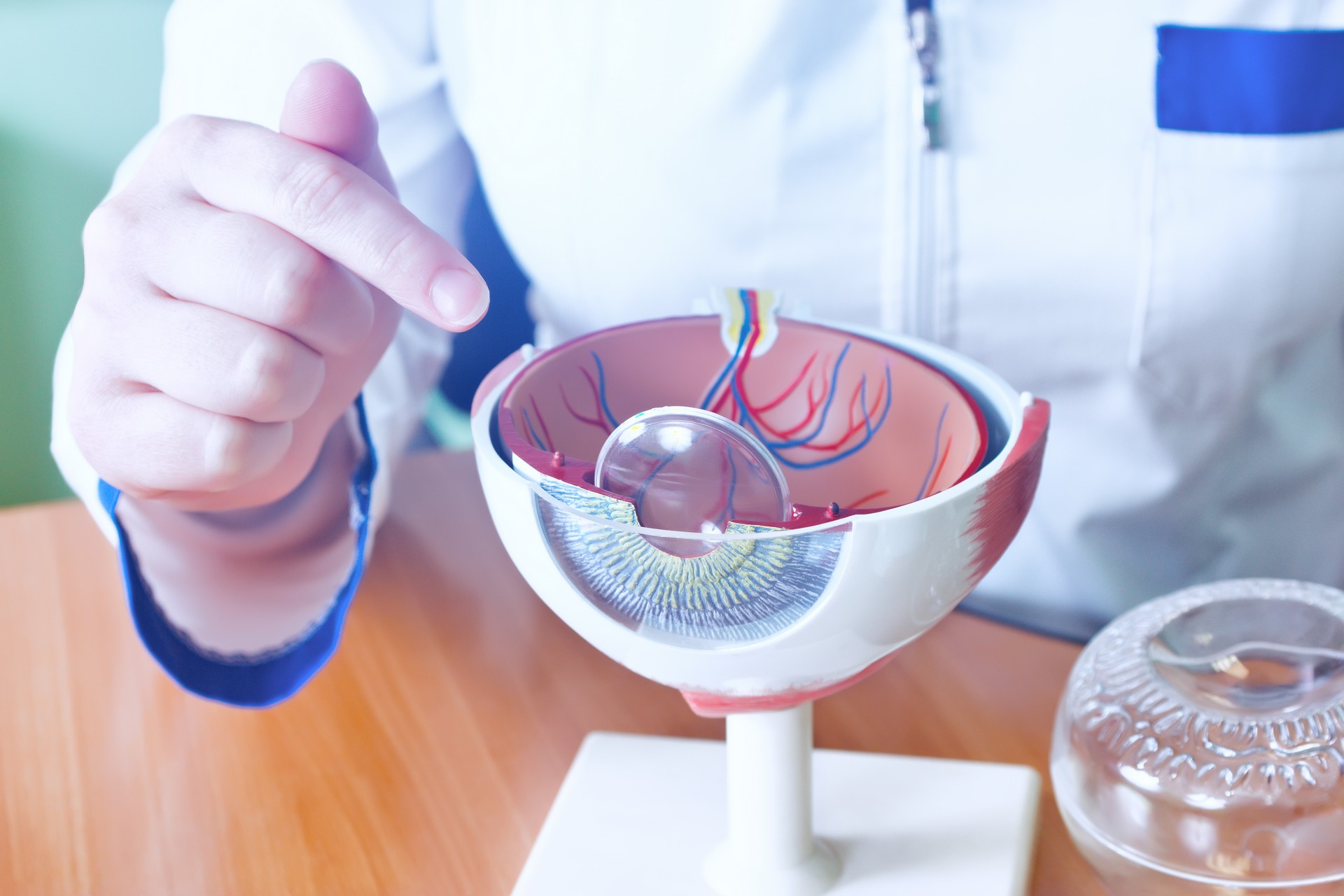
Corneal dystrophies are congenital in nature. The cornea consists of as many as six layers:
- anterior epithelium,
- The anterior border membrane (the so-called Bowman’s layer),
- The cornea’s dermis (stroma), which makes up 90% of the cornea’s thickness,
- Duy layers (it is not intimidated by pressures of 1.5-2 bars!)
- Posterior border lamina (Descemet’s membrane),
- endothelial.
Each of these layers can be characterized by dystrophic structure. Modern medicine knows as many as dozens of types of corneal dystrophy!
Cogan’s dystrophy
One of the most common corneal dystrophies. It can be either congenital or spontaneous (idiopathic), that is, it appears without an apparent cause. The symptoms of the disease, which is often diagnosed at eye examinations for quite a different circumstance, are nonspecific. Patients report, for example, spontaneous eye pain unrelated to trauma often occurring after waking up, a feeling of a foreign body under the eyelid or visual disturbances.
Fuchs’ dystrophy
In the early stages of the disease, which can also be congenital or spontaneous, it is typical for vision to deteriorate in the morning and gradually improve during the day, but these symptoms are not observed with corneal parenchymal dystrophy.
This type of dystrophy is more common in women, and the first symptoms usually appear after the age of 50.
Treatment of corneal dystrophy
Treatment is always selected according to the severity of the disease and is based on the use of eye drops and ointments and special dressing contact lenses. In advanced stages of Cogan’s dystrophy, the following can be performed therapeutic photokeratectomy (PTK). When there is permanent loss of corneal translucency, corneal transplantation is sometimes necessary to remove the damaged tissue. Nevertheless, there are times when recurrence occurs even in the transplanted cornea.
Sources
- Weiss JS, Møller HU, Aldave AJ et al. IC3D classification of corneal dystrophies – edition 2. Cornea 2015;34(2):117–159. doi:10.1097/ICO.0000000000000307