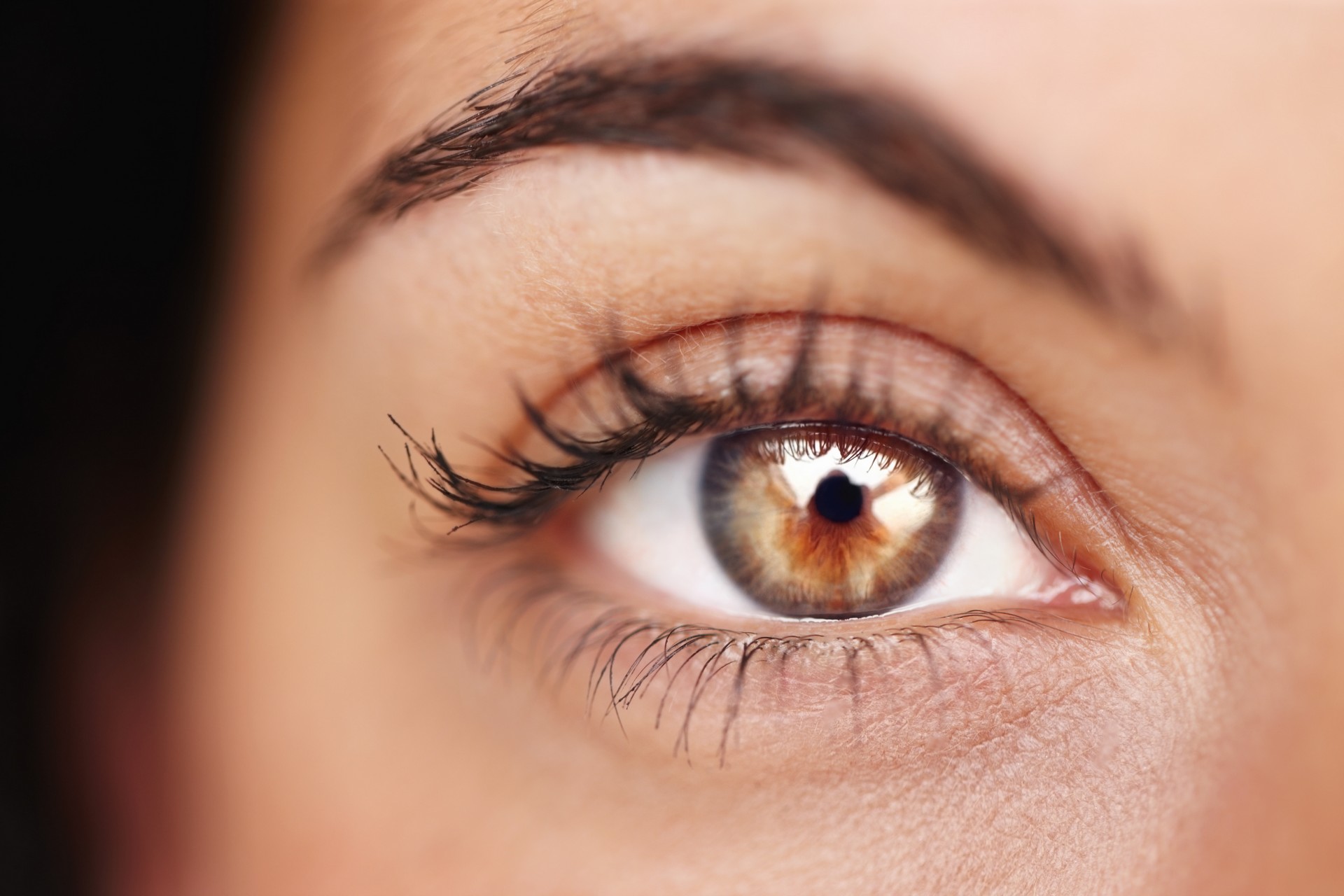
Farsightedness (hypermetropia, hyperopia), also called hyperopia, is a visual defect in which parallel light rays entering the eye after passing through the eye’s optical centers refract not on the retina but behind it, and the resulting image on the retina is out of focus. If the eyeball is too short, the collecting capacity of the cornea or lens too small, or both of these features occur together, we will face farsightedness. When the breaking power of the eye’s lens is too low, we speak of corneal or lenticular hyperopia. On the other hand, if the eyeball is too short and the breaking force is normal, we talk about axial hyperopia.
What are the symptoms of farsightedness?
Among the symptoms of farsightedness, trouble seeing comes first. Although a farsighted person – unlike a nearsighted person – is said to have trouble seeing clearly objects located close to the eyes, they most often have trouble seeing objects clearly from any distance. Hyperopia is a defect in the refraction of the eye, as a consequence of which the eye with hyperopia sees poorly at distance and up close. In addition to vision disorders, there may also be eye pain and headaches caused by over-accommodating the eye and trying to “sharpen” the vision, e.g. when reading; tearing, fatigue and burning eyes, e.g. when working at the computer.
Are farsightedness and hyperopia the same visual defect?
Yes, it is the same defect under different names. In specialized literature, we also meet the Latin names hypermetropia and hyperopia.
NOTE: the so-called presbyopia (farsightedness, presbyopia) is not the same as farsightedness (hyperopia, hypermetropia, hyperopia). Ba, it is not a vision w a d a at all, but a set of changes that occur with age in the human eye. It can also appear in people who have never been diagnosed with any vision defect.
Is farsightedness in children different from farsightedness in adults?
Children up to the age of 3 have what is known as physiological hyperopia, but as the eyeball grows, it should subside (the eyes should undergo a process of emmetropization, that is, get rid of hyperopia to achieve a state without a visual defect). The child’s eye has a very high capacity for accommodation, and even in a situation where physiological hyperopia does not subside, turning into a visual defect, it may go unrecognized (so-called hidden hyperopia). Not only that: in hyperopia, so-called “hidden hyperopia” can occur. apparent myopia. This is because there are times when there will be a spasm of accommodation leading to the hyperopic eye becoming functionally myopic. The person sees poorly into the distance, there may be severe eye pain, but the pupil is narrow (this distinguishes apparent myopia from a glaucoma attack). Such symptoms may accompany anxiety disorders, panic attacks, migraine, general fatigue.
Between the ages of 25 and 40, the typical symptom of hyperopia is worse near vision. After the age of 40, hyperopia manifests as poor vision both far and near (due to weakened accommodations).
How can farsightedness be corrected?
Farsighted people are prescribed glasses with convex lenses, or “plus lenses,” which are thicker in their center than at the edge. This type of lens focuses light by moving the focus point to the retina. Contact lenses, which, for farsighted people, do not cause the narrowing of the field of vision that glasses do, have good results.
Hyperopia can also be corrected with laser treatments. Taking into account the degree of the disease, the degree of farsightedness can be considered low when the dioptric value is no higher than +2.0 and high when their value exceeds +5.0. The method of treatment depends on the number of diopters and is determined individually during the initial examination and consultation with the doctor. During treatment of farsightedness with laser ophthalmoscope, a larger curvature is created, which increases the refractive power of the eye and thus improves comfort and visual acuity.