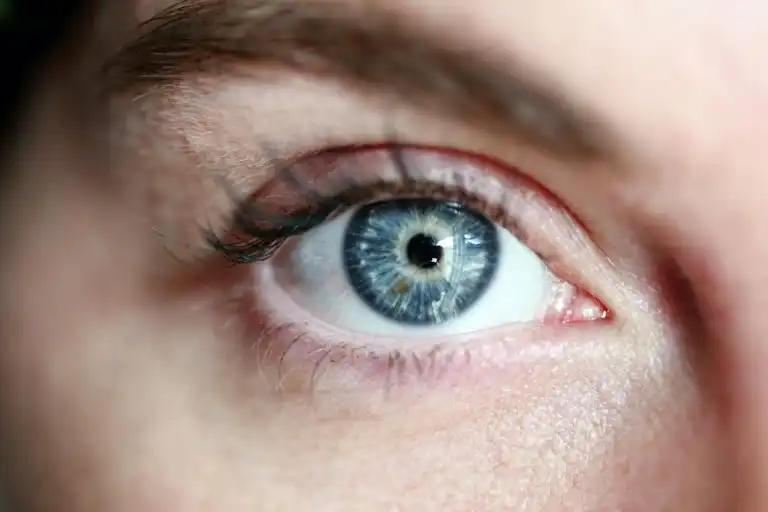
Imagine a morning when you wake up and see clearly – without frantically searching for your glasses or inserting contact lenses. This is not a dream! Laser vision correction is today the safest and most precise path to this freedom. This is no longer a futuristic vision, but a routine procedure that permanently eliminates refractive errors. How does it work? We simply reshape your cornea so that light focuses perfectly on the retina. At Swisslaser clinics in Warsaw and Krakow, we uphold the highest standards, because we know that your vision and quality of life are at stake. Do you have myopia, astigmatism, or perhaps presbyopia is beginning? We have innovative solutions that will help you regain complete freedom!
What will you learn from the text below?
- Is laser correction a safe choice?Absolutely, it is currently the safest form of surgical intervention in the eye, with proven efficacy reaching up to 95% of patients.
- Can you benefit from laser refractive error removal?If you have myopia, hyperopia, astigmatism, or even presbyopia, most likely yes!
- How do the individual procedures differ?We distinguish surface methods (such as TransPRK), deep methods (such as FemtoLASIK), and flapless methods (such as ReLEx® SMILE), which differ in their mechanism of action and healing speed.
- Why is new technology better?The latest procedures, such as FemtoLASIK, utilize femtosecond lasers, which means the end of the scalpel and absolute, computer-controlled precision.
- How quickly will you return to normal life?Although the procedure itself takes only 15–20 minutes, you will regain excellent vision within a few hours to several weeks – it all depends on the chosen method.
1. Introduction to Laser Vision Correction
- 1.1 What is laser vision correction? No, this is not magic – it is precise laser refractive surgery! We have tremendous capabilities to precisely reshape the anterior surface of the cornea, eliminating the refractive error. Your eye regains the ability to properly focus images on the retina.
- 1.2 Historical Background and Key Figures The history of this method is a fascinating journey that began in the 1980s. Did you know that one of the older, yet still used techniques – PRK – has been in operation since the late 1980s? And who was the pioneer? Dr. Theo Seiler performed the first successful procedure using an excimer laser as early as 1987! We owe the invention of the LASIK method to Ioannis Pallikaris. Such achievements led the U.S. FDA in 1995 to approve PRK and enable its widespread use.
2. Procedure Qualification and Safety
- 2.1 Who qualifies for the procedure? If you are struggling with myopia, hyperopia, or astigmatism, you are most likely an ideal candidate. But that’s not all! Thanks to advances in technique, we are increasingly successfully treating presbyopia as well, which means that even after age 40, you can say goodbye to glasses.
- 2.2 Qualification Examinations – The First Step Remember, professionalism requires attention to detail! Every laser procedure is preceded by thorough qualification examinations. What must we verify? Whether your refractive error has stabilized (this is an absolute requirement!) and whether there are any contraindications. Through this rigor, we select the method for you that ensures maximum safety and the best possible outcome.
- 2.3 Procedure Course and Safety Parameters Don’t worry about pain! The entire procedure is performed on an outpatient basis, which means you simply sit in the chair while we apply topical anesthesia in the form of drops. Forget about general anesthesia. And how long does it take? Only 15–20 minutes – less time than drinking a cup of coffee.Expert Statement: “Patients often ask me: ‘Doctor, is this really safe?’ I answer honestly: yes! From a medical standpoint, this is the safest and most precise form of intervention in the eye that we have today. Statistics prove our efficacy: approximately 95% of patients achieve excellent vision, and the risk of serious complications is minimal – below 1%. Of course, we do not provide guarantees, but we are talking about the highest efficacy!” – Dr. Victor Derhartunian, who has performed thousands of successful procedures.
3. Laser Vision Correction Methods: Overview of Techniques
At Swisslaser, we do not apply a one-size-fits-all approach. We select the tools that are ideal for you. Consider the classification:
- 3.1 Surface Methods What do they involve? We gently remove the top layer (epithelium), reshape the underlying tissue with an excimer laser, and then the epithelium naturally regenerates.
- 3.1.1 PRK (Photorefractive Keratectomy): The classic approach. The epithelium is removed mechanically after softening. You must expect a somewhat longer healing period.
- 3.1.2 EBK (Epithelial Bowman’s Keratectomy): This is an improved version! We use the precise Epi-Clear blade to minimize damage. The result? The epithelium regenerates up to twice as fast!
- 3.1.3 TransPRK (Trans-epithelial…): The greatest innovation in surface methods! The entire procedure is performed by the excimer laser alone – no surgical instruments. This is simultaneous correction and epithelial removal, meaning minimal tissue intervention.
- 3.2 Deep Methods (with corneal flap) Here we create a very thin corneal flap, lift it, the laser reshapes the inner layer, and then the flap is repositioned and quickly adheres.
- 3.2.1 LASIK: Traditionally, the flap was created with a microkeratome (blade). This is a fast and proven technique.
- 3.2.2 FemtoLASIK (All-Laser-LASIK): A true breakthrough! In this technique, the femtosecond laser takes over the role of the scalpel. It is computer-controlled, giving us maximum, previously unattainable precision.
- 3.2.3 SBK-LASIK: Do you need an ultra-thin flap? In SBK-LASIK, it is only 90–100 microns! This is a solution for individuals who previously, due to an excessively thin cornea, could not consider laser correction.
- 3.2.4 EPI-LASIK: Ideal for individuals who lead an active lifestyle – athletes, soldiers, police officers. Why? We perform the correction on the surface, which minimizes the risk that a potential trauma will disrupt the internal flap.
- 3.3 Flapless Methods (Minimally Invasive) This is the quintessence of modern ophthalmology – we simply do not need a large corneal flap!
- 3.3.1 ReLEx® SMILE We call it the “keyhole method.” The VisuMax® femtosecond laser creates a tiny lenticule inside the cornea, which is then removed through a minimal incision. The greatest advantage? No large flap means the shortest recovery and the least intervention!
4. Summary and Perspectives
As you can see, laser vision correction has undergone remarkable evolution. Thanks to innovations such as FemtoLASIK and ReLEx® SMILE, we provide patients in Warsaw and Krakow with methods that are not only highly effective, but above all maximally safe and minimally invasive. This is simply the best investment in your quality of life.
FAQ – Frequently Asked Questions
Q: Does this procedure hurt?
A: No! It’s straightforward. The entire procedure is painless because we use topical anesthesia in the form of drops. You may feel only a gentle, momentary pressure.
Q: How quickly will I recover?
A: It depends on what you choose. If you opt for FemtoLASIK or ReLEx® SMILE, you will regain sharp vision within several hours! Surface methods (PRK, TransPRK) require a bit more patience – recovery takes up to several weeks.
Q: Does the correction result last permanently?
A: Yes, we eliminate your current, stable refractive error once and for all. The risk that the error will return (so-called regression) is truly very small, provided we have conducted a thorough qualification.
Q: Can I have correction if I am 50 years old?
A: Of course! At this age, we often focus on correcting presbyopia or combine it with the elimination of other refractive errors. Age is not a barrier, as long as you are healthy!
Q: Must I discontinue contact lenses before examinations?
A: Yes, this is very important! Contact lenses alter the shape of the cornea. You must discontinue them for the period specified by your physician so that we can perform measurements with maximum precision.