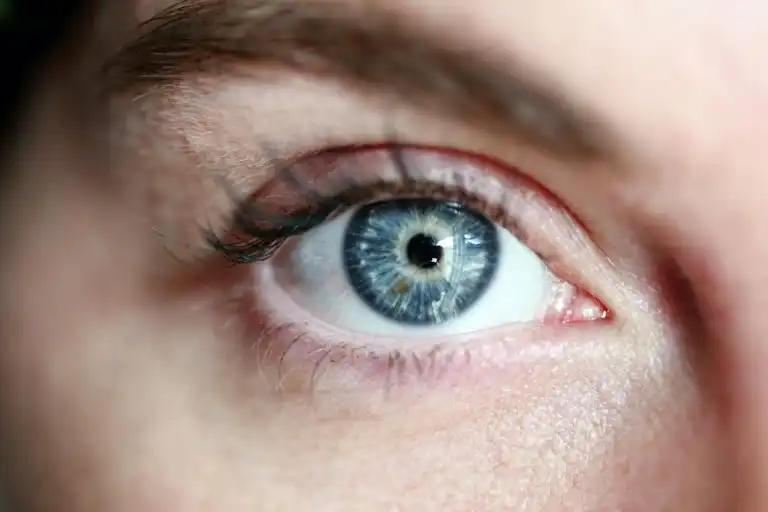
Refractive lens exchange, or RLE (refractive lens exchange), involves removing the patient’s natural lens and replacing it with a technologically advanced artificial lens that corrects the vision defect. However, modern artificial intraocular lenses can be selected in such a way that they correct not only refractive errors, commonly known as vision defects, but also other conditions.
A Few Words About Refraction
When refraction is zero, you have no vision defect, and the ophthalmologist will tell you that you have an emmetropic eye. The complex optical system of the eye then refracts light and focuses it on the retina. If, however, the image is focused in front of the retina, you are dealing with myopia (nearsightedness). Conversely, an image focused behind the retina indicates hyperopia (farsightedness), and if there is no single focal point, we speak of astigmatism.
Refraction is the value by which the power of our eye must be changed to become emmetropic. What contributes to this power in the eye? It is the cornea and the lens.
If you are tired of wearing corrective glasses or contact lenses, you can undergo laser vision correction, which involves reshaping the front surface of the cornea with a laser. The result is improved visual acuity in patients with myopia, hyperopia (farsightedness), and astigmatism.
If, for any reason, your ophthalmologist does not approve laser vision correction for you, you can opt for refractive lens exchange. This procedure involves removing your natural lenses and replacing them with technologically advanced artificial lenses that correct vision defects, i.e., intraocular lens implants.
And now the most important thing: you can choose refractive lens exchange as a first-choice operation when you are struggling with severe hyperopia, and in some cases, also with myopia. It sometimes happens that you are not eligible for laser vision correction but can undergo lens exchange.
In both cases, if you opt for PREMIUM lenses, along with your vision defect, you will also get rid of presbyopia and/or cataracts. In short: regardless of whether your problem is a refractive error, i.e., a vision defect, or if you additionally have presbyopia and/or cataracts, one procedure – refractive lens exchange – will free you from all of them.
Personalized Parameters of the Artificial Intraocular Lens
During refractive lens exchange in a private clinic, it is possible to use a lens individually tailored to the needs of a specific patient. Given that an artificial lens cannot be exchanged, it is extremely important that the patient receives implants during the procedure that will best meet their needs.
Such personalized artificial lenses belong to the PREMIUM segment. You can choose lenses that allow for:
- astigmatism correction (toric lenses)
- presbyopia correction (multifocal lenses – trifocal, multifocal, EDOF – extended depth of focus)
- improved contrast vision (aspheric lenses)
- prevention of age-related macular degeneration – AMD (lenses with UV filter and blue light filter)
Everything you want to know about artificial intraocular lenses, including PREMIUM lenses, can be found here.
Importantly, refractive lens exchange can also be performed on patients who have previously undergone laser vision correction.
Does replacing your natural lens with an artificial one hurt?
Refractive lens exchange is an outpatient procedure, or as you prefer: day surgery. You receive local anesthesia in the form of eye drops. Your natural lens is fragmented using ultrasound and aspirated with a phacoemulsifier. Then, through the same micro-incision through which the natural lens was aspirated, the artificial lens is inserted, and a dressing is applied.
The procedure is painless, and postoperative wound healing and vision rehabilitation occur very quickly.