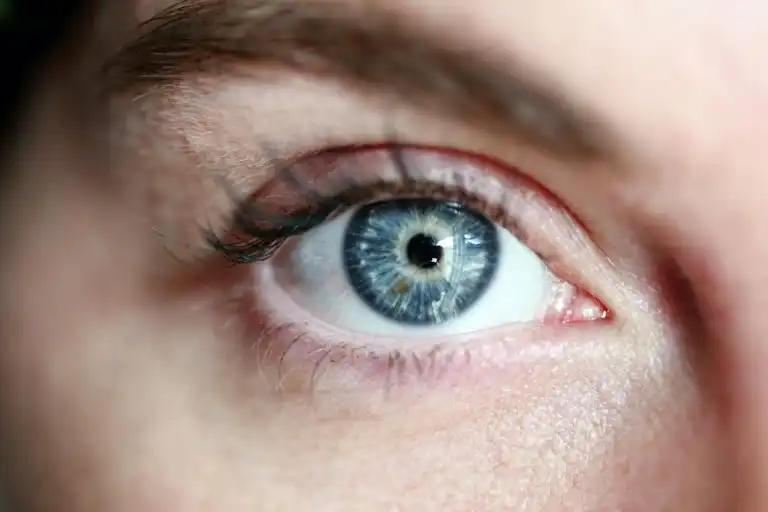
Have you ever wondered why the phrase “artificial lens implantation” is almost exclusively associated with seniors and cataract treatment? This is a common misconception! While it is indeed the only salvation for people with cataracts, modern medicine can get much more out of this method. Imagine that refractive lens exchange (IOL) is actually a powerful tool that restores freedom from glasses even when your eyes are healthy, but you are struggling with a significant vision defect. At SwissLaser, we prove every day that this solution works wonders where laser correction has to give up.
What will you learn from the text below?
- Is lens replacement a method reserved only for people with cataracts?Absolutely not, because it is an ingenious way to get rid of high vision defects in people who, for various reasons, cannot undergo laser treatment.
- Why choose an IOL lens for a very high vision defect?An artificial implant can handle even complex astigmatism or severe farsightedness, which a laser could not safely remove from the cornea.
- Is it possible to kill two birds with one stone and combine cataract removal with vision correction?Yes, modern multifocal lenses allow us to remove cloudiness and say goodbye to reading glasses once and for all during a single procedure.
- What is this mysterious ametropia and how do we treat it?We are talking about a defect resulting from the eye’s structure, which in the most difficult cases we correct by implanting not one, but two lenses.
- Can I still have a lens replacement after a previous laser procedure?Absolutely, the history of your previous laser procedures does not prevent us from implanting an artificial lens into your eye now.
Lens replacement not only for cataracts – a modern solution for your eyes
An alternative to laser vision correction – when should you consider it?
Imagine you dream of a life without glasses, but during qualifying examinations you hear: “I’m sorry, your cornea is too thin” or “this defect is simply too high for a laser.” Does this mean you have to stay with glasses? Not at all! This is precisely when refractive lens exchange comes into play. It is an ideal solution for people with extreme nearsightedness or farsightedness, where interfering with the corneal structure would simply be too risky.
One surgery, many benefits: Combining cataract treatment with vision defect correction
The real magic happens when we solve several problems at once with a single procedure. If you feel that cataracts are starting to bother you, and you’ve been struggling with “plus” prescriptions or astigmatism for years, we can implant a multifocal or toric lens. The result? You leave the clinic and suddenly realize that you no longer have to look for glasses to read a restaurant menu or check something on your phone.
Specialized applications of artificial lenses (IOLs)
Treatment of severe ametropia with the two-lens method
There are situations when one lens is not enough for you to enjoy a perfect image. When the structure of your eye is exceptionally atypical (i.e., you are struggling with severe ametropia), we use the “duet” method. First, we implant the main lens, and after a few weeks, we add a second, complementary one. This allows us to precisely refine the final effect. This is probably the highest form of personalization offered by modern ophthalmology.
Application in patients with severe farsightedness and astigmatism
Farsightedness can be a tough nut to crack for a laser, especially when it is very high. Lens replacement elegantly bypasses these limitations. An artificial implant simply replaces your inefficient optical system, giving you sharp and stable vision regardless of how thick your glasses were before.
Presbyopia and myopia – life without glasses after surgery
Presbyopia under the microscope: How lens replacement “turns back time” for your vision?
Have you noticed that after forty, your arm for reading the newspaper suddenly becomes “too short”? This is presbyopia, or age-related farsightedness – a natural process that affects almost everyone.
Dr. Victor Derhartunian explains it vividly: “With age, our natural lens simply loses its elasticity. By replacing it with a modern, multifocal equivalent, we effectively restore the patient’s comfort of vision at all distances. From a smartphone screen, to a computer, to the horizon itself. It’s a bit like turning back time for your eyes.”
Refractive lens exchange in patients after previous laser procedures
We often hear the question: “What if I had laser surgery ten years ago, and now I’m suffering from cataracts or reading problems?” Don’t worry, the path is open! Previous laser correction does not block our ability to implant an artificial lens. It’s a natural, next step in caring for your vision when biology starts to make itself known.
Frequently Asked Questions (FAQ)
1. Can an artificial lens “wear out” or break over time?
No way! IOL lenses are made of materials that get along perfectly with your body and remain in your eye in perfect condition forever. You never have to replace them.
2. How quickly will I recover after such a procedure?
Surprisingly quickly. Most of our patients see a colossal difference the very next day. Of course, vision stabilizes over several weeks, but you return to normal life almost immediately.
3. Does it really not hurt?
Word of honor – it doesn’t hurt. Your eye receives special anesthetic drops, so you may only feel a gentle pressure. Fear, in this case, has much bigger eyes than the procedure itself.
4. Can cataracts ever return after lens replacement?
That’s impossible. Because we removed your natural lens (where cataracts develop), this problem disappears from your life forever.
Want to check if lens replacement is the ideal solution for you?Come to us for examinations in Warsaw or Krakow. Together, we will find the best way for you to see the world without any barriers again!