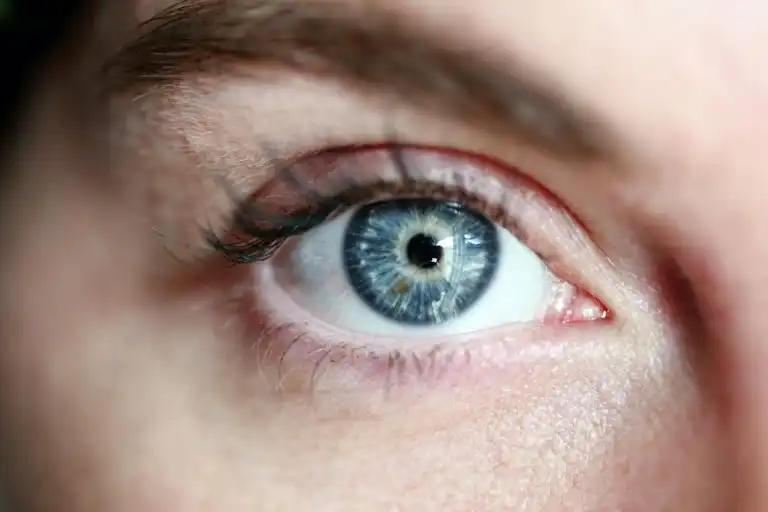
In many of us, the very fact that vision correction can be performed with a LASER instills fear. Do we imagine that this kind of surgical intervention is accompanied, like an action movie, by a beam of red light that burns everything in its path, and when it comes into contact with the eyeball, the stench of burned tissue rises in the operating room?
Free! Don’t let your imagination run too far. Excimer lasers, which are responsible for the correction of vision defects, belong to the group of non-thermal lasers. They provide the energy necessary to break molecular bonds, so the tissue is effectively vaporized-we get rid of it through ablation, not burning.
So we’ve debunked the most popular myth, now it’s time to address another.
Laser vision correction is some kind of newfangled invention – no one is yet sure that it works….
MIT
PRK (or photorefractive keratectomy) has been a surgical procedure performed since the late ’80s and is considered one of the older methods of refractive laser surgery. The first successful procedure using the excimer laser was performed by Dr. Theo Seiler in 1987. In contrast, the invention of the LASIK method is credited to Joannis Pallikaris. In 1995, the FDA (U.S. Food and Drugs Administration) approved the excimer laser and approved PRK, or photorefractive keratectomy, as a generally available medical procedure. Looking at the dates, we can conclude that doctors have had enough time to evaluate all methods of laser surgery and learn to select a method appropriate to each patient’s individual needs. And the development of laser methods is still progressing!
It is worth knowing that twenty years after the excimer laser was listed by the FDA (i.e. in 2015), it was decided to conduct a survey of ophthalmologists practicing refractive surgery in the US. The survey showed m. in. That ophthalmologists are as much as 4 times more likely to undergo procedures laser vision correction and as many as 2/3 of them recommend these procedures to their immediate family members. And in a 2013 study, as many as 95% of “ordinary” Americans felt satisfied with the long-term effects of the procedure.
Only short-sighted people qualify
MIT
People who are nearsighted, hyperopic and astigmatics are eligible for laser vision correction. Depending on the visual defect, the cornea can be: convex when it is too flat (in farsighted people); flattened when it is too convex (in nearsighted people); or leveled when the cornea has an irregular shape (in astigmatics). Laser intervention is also carried out in cases of presbyopia (so-called presbyopia farsightedness). Not only that: the latest surgical technologies make it possible to combine surgery for short/far/near-sightedness with simultaneous removal of other visual defects, such as astigmatism.
High or complicated visual defect never subject to laser surgery
MIT
No – NEVER. A high or complicated vision defect requires more detailed examination. The type of visual defect, the anatomical condition of the eyes and any eye diseases, as well as general health, determine whether our eyes can undergo laser surgery. With state-of-the-art lasers, we are able to remove defects in the range of +4.0 to -10.0 diopters and up to 6 diopters of astigmatism during a single procedure. One of the most important factors determining the amount of defect that can be removed is the thickness, degree of hydration and elasticity of the cornea . If we do not qualify for laser vision correction – it is always worth asking whether the doctor’s refusal is related to our health and anatomical conditions of the eye, or to the technical capabilities of the clinic, and possibly seek help elsewhere – we can use refractive lens replacement, for example.
I’m too young!
FACT
For young people, it’s all about the eyeball completing the growth process and the visual defect stabilizing. As long as the eyeball is in the growth phase, each 1-millimeter elongation of the eyeball induces a visual defect of -3.00 diopters. Usually doctors undertake laser vision correction when the patient turns 18. There are also those who prefer to wait until he is 21. year of age. It is worth knowing that in individual cases a refractive surgeon can undertake laser vision correction before the patient is 18 years old. If you observe the patient from the very beginning and know the patient’s correction history, you know when you can tell the stability of the defect.
I’m too old!
FACT
Age limits for laser vision correction are conventionally set, and eligibility for surgery largely depends on the patient’s overall condition, and individual characteristics and needs. Although many times we will encounter the phrase: “we operate on people up to the age of 55/60/65,” whether a patient is too old for surgery is decided by the doctor in each case. And it happens that he may refuse laser intervention. But this is not because age discrimination is involved, but the condition of the eye – in this thickness, degree of hydration and elasticity of the cornea – and overall health, which can deteriorate significantly with age. However, it is common for older people – again, it is difficult to specify age – to undergo refractive lens replacement surgery for presbyopia and/or cataracts. When deciding on refractive lens replacement as part of cataract surgery, we can opt for a type of lens that will “incidentally” correct the patient’s existing visual impairment. The latest surgical technologies make it possible to combine cataract surgery with simultaneous removal of other visual defects, such as astigmatism or presbyopia.
I am panic-stricken by anesthesia….
MIT
During laser eye surgery, the patient does not undergo general anesthesia. Laser vision correction is performed under local anesthesia (anesthetic drops are instilled into the eyes) in an outpatient setting.
It hurts!
MIT
It doesn’t hurt. Depending on the method chosen, the patient may experience more or less, but short-term discomfort. None of the laser vision correction methods are associated with painful sensations AFTER the operation. In the FemtoLASIK and SMILE methods (the so-called deep methods), there may be discomfort for up to 3-4 hours, there may be tearing due to the fact that the epithelium has been incised. In the PRK/LASEK/TransPRK method, discomfort can last up to 3-4 days.
I won’t lie still and without blinking my eyes even for a few minutes, it’s not for me
MIT
Modern laser devices have an eye tracking function (such as the Eye Tracker 6D or 7D system), so they are very precise, and the patient does not have to worry that a slight movement of his eye will make the procedure fail. Blinking is impossible because a dilation is inserted outside the eye, preventing movement of the upper eyelids.
Also in the case of nystagmus, laser treatment is possible.
I have to take L-4 for an extended period of time
MIT
You don’t have to. Most patients can return to work and normal daily activities as early as 24 hours after the procedure, but if you are concerned that you will not be able to focus on work during recovery, just take a few days off. If it is necessary and we take up work the very next day, we should moisten our eyes very intensively and protect them with glasses so that no foreign body enters the eye.
After surgery, complications often arise
MIT
The rapid development of ophthalmic techniques makes laser eye surgery a maximum-safety procedure. The number of complications is less than 1% of cases. For any medical procedure, the term “guarantee” is not used, but “effectiveness of the procedure.” The laser vision correction procedure is effective in approx. 95%. Statistics on laser vision correction report that about 95 percent of those operated on achieve a quality of vision safe for driving after the procedure.
You can lose your eyesight
MIT
No, there is no such risk. There is only a risk that when an eye with an unstabilized defect undergoes surgery, it may be necessary to repeat the operation in the future.
As British sources read: Realistically, the chance of losing vision as a result of laser vision correction performed by an experienced surgeon is too small to measure – close to 1 in 5 million.
I decide to have the surgery, it will be OK for a while, and then it will be necessary to undergo surgery again
MIT/FACT
If laser vision correction is performed on a stabilized defect, taking into account all the individual anatomical features of the patient’s eye, the defect should be eliminated once and for all. If the procedure was performed on an eye with an unstabilized defect, the defect may need to be corrected in the future, i.e. another operation. In other words: the changes made in the shape of the cornea during laser surgery are permanent, but eliminated short-sightedness/hyperopia/astigmatism does not exclude, however, that between the ages of 40 and 45 the first symptoms of so-called presbyopia , i.e. a decline in the eye’s ability to accommodate, developing during the natural aging process, may appear. And that’s when you can undergo another treatment. The same is true if the eye once operated on with a laser due to a defect in vision begins to undergo the process of lens clouding, i.e. cataracts appear. Previous laser surgery does not preclude another surgical intervention – in this case: replacement of the cloudy lens.
Should the need arise, I would not be able to wear contact lenses.
MIT
After laser vision correction, contact lenses can be worn.
It’s expensive as hell!
MIT
It’s not free, meaning that the National Health Service does not reimburse laser vision correction procedures, considering them to be… cosmetic procedures. It’s not cheap, either. But the laser vision correction procedure is a one-time expense and offsets all other expenses related to glasses and/or contact lenses for the rest of your life. Well, and priceless is the fact that we can finally apply for our dream job, participate in sports competitions, engage in hobbies or drive a car freely. Eye health has no price!