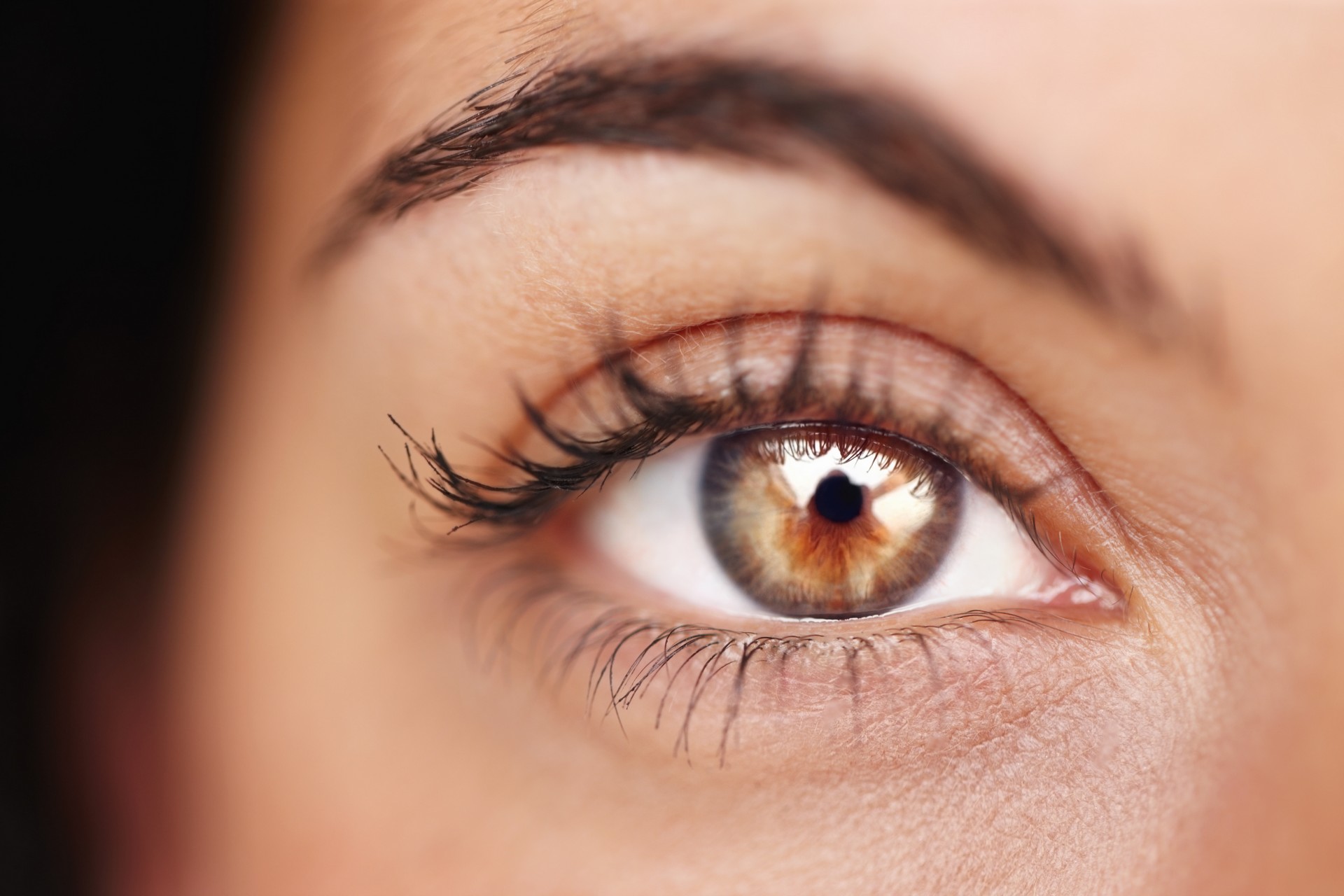
Cataract is a clouding of the lens of the eye, which, as the clouding area increases, can even lead to complete loss of vision. However, it is not an irreversible loss. Cataracts can be completely cured by removing the clouded lens and implanting a new one – an artificial one. Cataract surgery is now one of the most commonly performed ophthalmologic procedures.
In its early stages, cataracts can be completely imperceptible and unnoticeable. Worldwide, as many as half of people over the age of 70 suffer from cataracts. It is observed that people in developing countries are more likely to suffer from cataracts at a younger age, which may be related to malnutrition and a generally unhealthy lifestyle.
Waterfall, cataract and gray star – how our ancestors imagined what happens in a diseased eye
Cataracts usually appear around 50. year of age. The increasingly rare name for a cloudy lens, or cataract (English: cataract, Spanish: catarata, French: cataracte), used today, makes it perfectly clear how our ancestors imagined what happens to the eye as the process of lens clouding proceeds.
It is said that the ancient Greeks believed that one of the first symptoms of cataracts – that is, seeing as if through a fog, a veil – is caused by liquid flowing into the eye like a waterfall (analogous to the phenomenon observed in nature when a kind of dam is formed at the junction of the two types of rocks, overcome by water in a violent manner to form a waterfall).
This hazy vision is not only subjectively felt by the patient. The cloudy lens is, at some stage, visible from the outside. The outside observer perceives it as gray – hence, in turn, the German name for cataracts or “grauer star” – gray star.
How cataracts change the lens of the eye
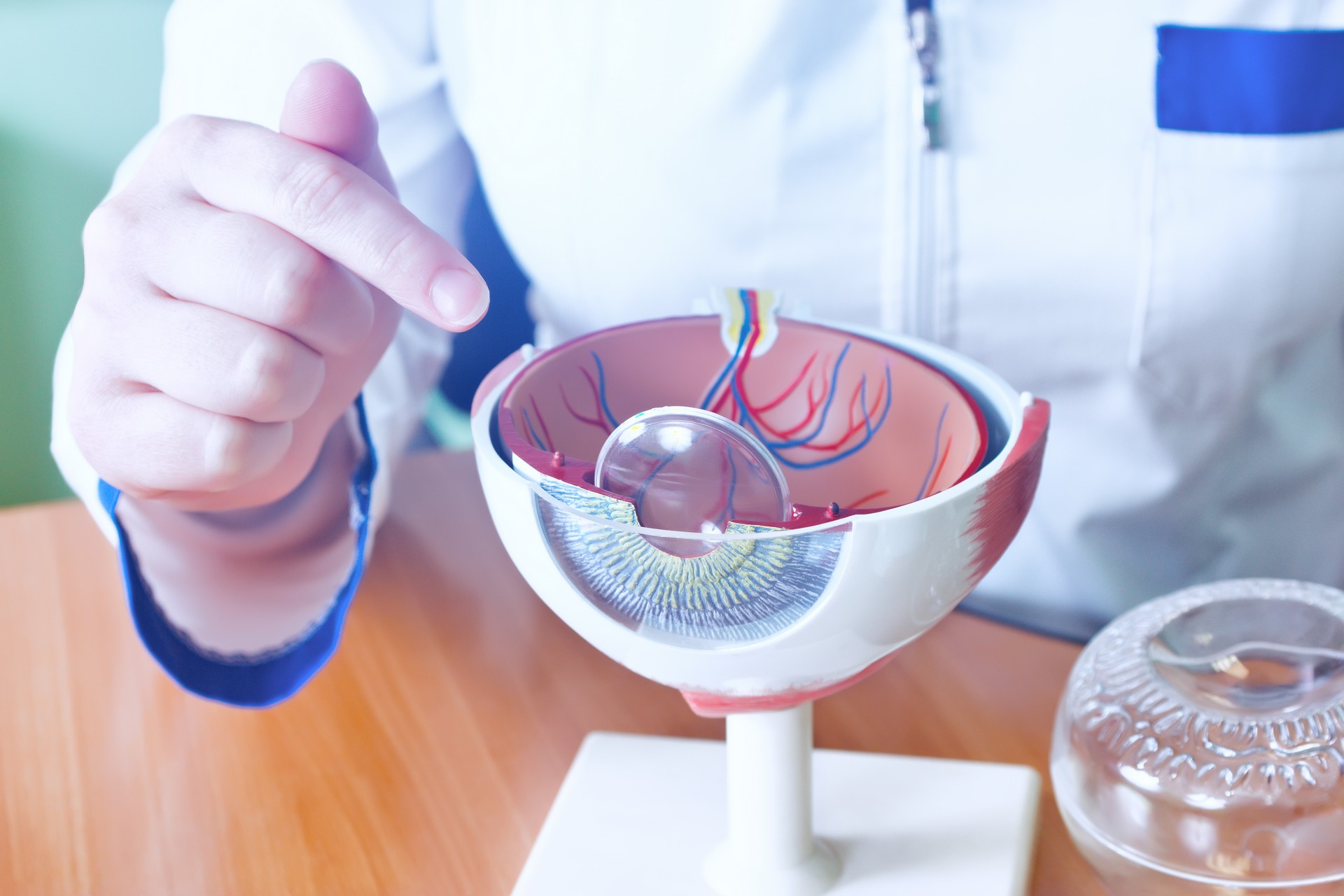
The lens of the eye (Latin: lens)) is an organ without nerves and vessels. It consists of m. in. From the lens capsule (Latin: capsula lentis) and the lens nucleus (nucleus lentis). Like the lens of a camera, the lens of the eye is crystal clear.
During our lifetime, the lens of the eye undergoes changes: new cells form in the nucleus, over the years the lens becomes thicker and less flexible. If the lens loses elasticity, its refractive power also changes, and objects nearby become increasingly blurred. This process leads to the development of presbyopia – ie. the so-called. senile farsightedness.
The changes in the lens of the eye resulting from its opacity are related to the emerging dysfunction of certain highly concentrated proteins, which remain transparent thanks to other proteins – protective A-Crystallin (cryAA) and B-Crystallin (cryAB). When cryAA and cryAB cease their protective function, the said highly concentrated proteins present in the lens clump together and lead to opacity.
Cataract symptoms you definitely won’t miss
Opacity (opacity, opacity) of the lens also manifests itself in the form of such annoying symptoms as:
- blurred vision – primarily to distance
- hypersensitivity to light
- impression of excessive color intensity
- Slowing down the eye’s accommodation to lighting conditions
- deterioration of spatial vision
- warning halo around light sources (halo effect)
All of the listed symptoms are particularly troublesome for drivers.
What are the causes of cataracts
The factors leading to the remodeling processes in the lens fibers of the eye and to its turbidity are not fully known. One factor is considered to be oxidative stress, which is a state of imbalance between the action of reactive oxygen species (free radicals) and the biological ability to rapidly detoxify reactive intermediates or repair the damage done. Other factors that contribute to cataracts are:
- natural aging processes
- UV radiation
- infrared radiation
- too little physical activity
- diabetes
- malnutrition
- smoking
- eye injuries
- Some eye surgeries (e.g., removal of the vitreous body from the eye)
- Taking certain medications (such as cortisone)
When a mother passes rubella during pregnancy, the fetus can be burdened with congenital cataracts.
What you should know when deciding on cataract surgery
The surgeon’s experience, the surgical technique he chooses and the type of lens to be implanted are key factors when it comes to the quality of vision after cataract surgery.
Today, cataracts are operated on at an early stage. One does not wait until the lens has reached such a stage of opacity that the patient has difficulty with normal daily functioning.
With minimally invasive surgical technology and the ability to maximally customize intraocular lenses, cataract surgery is safe and effective.
Although the surgical techniques used to treat cataracts vary widely from clinic to clinic, at Swiss Laser we perform surgery with a high-precision phoemulsifier from the Swiss company OERTLI. This method involves making micro-incisions (called ports) in the cornea and removing the cloudy lens through them and then inserting a new lens. The treatment takes 10-15 minutes. We use phacoemulsification of cataracts, a method that removes the cataract with an ultrasonic tip and implants an artificial intraocular lens.
The procedure is performed under surface anesthesia applied as a gel or drops into the conjunctival sac. In place of the removed lens, a new one is inserted – a flexible, retractable, acrylic lens that unfolds on its own in the natural lens bag and settles in the right place in the eyeball. The incision is minimal (1.5 to 3 mm).
Recall again: the damage done to the lens of the eye by cataracts can be completely remedied. By replacing the lens with a new one, vision returns to normal. Importantly, when undergoing cataract surgery, we can ask for such artificial lenses to be implanted, which will further correct our visual defect (short/long-sightedness, astigmatism).