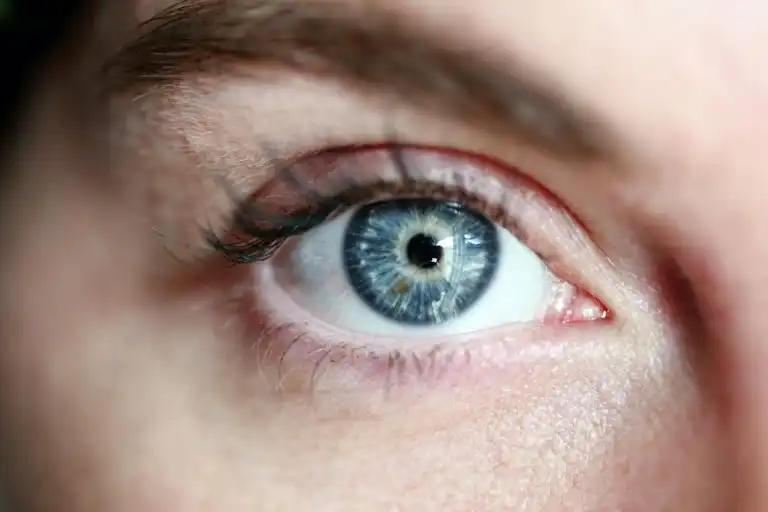
There are few organs in our body that we would fear for as much as our eyes. Nature is wise: we have two eyes, so if one were damaged, we would still be able to see the world around us. However, this doesn’t change the fact that the eyes are located in a place where it is easy to get injured. And while it’s really not difficult to damage the eye, it’s worth being aware that at the same time it’s an organ that has an unparalleled ability to regenerate and heal quickly. This is why recovery from laser vision correction, as some believe, is not a long and difficult process.
Let’s take a closer look at the entire recovery process after laser eye surgery: from the principles of quality post-operative care, to questions about returning to work duties, being able to drive, returning to exercise and training, or being able to wear full makeup, to a description of any potential side effects that may occur.
The first 24 hours after treatment
- Depending on the method, you may notice an improvement in your vision almost immediately after the procedure.
- For the first few hours, however, vision may be a bit hazy or blurry, so resting with eyes closed is recommended during this time.
- Don’t be frightened if your eyes are sensitive to light, and there may also be a glare or halo effect.
- Don’t get behind the wheel – it’s a good idea to come to laser vision correction treatment with a friend who will drive you home.
- You can return to light activity at home, but be careful not to do any activity that could lead to touching or rubbing your eyes.
- To prevent eye fatigue and ensure a quick recovery, avoid all screens – TVs, smartphones, tablets, computers, e-book readers – and all activities such as reading books.
- A bath instead of a shower is recommended to avoid eye irritation from soap and water.
- Remember that air conditioning can dry out your eyes. If necessary, use moisturizing drops with sodium hyaluronate (so-called artificial tears)
- Avoid contact with people suffering from infections such as colds, flu, or infectious diseases. The eye after surgery, like any other organ of our body in a similar situation, requires complete healing under the safest possible conditions.
REMEMBER!
Good pre-, post- and perioperative care takes into account all methods of doctor-patient communication available today. Your doctor should be available not only by phone, but also by email and various instant messengers. It’s difficult for you, right after laser vision correction, to have to go to him or her in person when you need to ask a question or address concerns about your recovery.
Right after laser vision correction you rest in the post-operative room for about 2-3 hours. If there are no contraindications, you can go home. Your doctor will give you a full list of post-operative instructions during your post-operative check-up. If you have any doubts, pain or the appearance of inflammation, you should see your doctor immediately.
Quick and painless recovery: how to deal with discomfort after laser vision correction
None of the laser vision correction methods are associated with painful sensations AFTER the operation. Depending on the method chosen, the patient may experience more or less, but short-term discomfort. Laser surgery is minimally invasive. This means that after the procedure, only the patient knows that it happened at all. There are no wounds, no stitches, no bandages – no visible signs that you have undergone surgery. But you did go through! You know this perfectly well, because you can see perfectly. Well, okay, maybe not immediately. Depending on the technique used, patients regain perfect vision within a few hours to a few months.
Surface methods: EBK, PRK, TransPRK
Surface methods are characterized by a slightly longer healing time and a smaller extent of defect removal than in deep methods. In the PRK/LASEK/TransPRK method , postoperative discomfort can last up to 3-4 days. In superficial methods, patients regain optimal vision in 3-4 months
Deep methods: LASIK, FemtoLASIK, ReLEx® SMILE
With deep methods, there may be discomfort for up to 3-4 hours, and there may be tearing due to the fact that the epithelium has been incised. In deep methods, patients regain optimal vision in one day to several days.
Laser Blended Vision (LBV) methods
With LBV methods, recovery varies from person to person. It all depends on how quickly your brain adapts to the new way of seeing (neuroadaptation).
Most patients become accustomed to their new vision within a few weeks. One hundred percent adaptation after PRESBYOND® Laser Blended Vision takes 4 to 6 months. LBV methods are well tolerated by an acceptable 97% of patients, and contact lens trials are performed prior to use to predict the effects of the procedure.
After laser vision correction surgery, take the indicated medications and eye drops as prescribed by your doctor. It is recommended to moisten your eyes well with artificial tears, especially if you work at a computer in an air-conditioned environment, as both can dry out your eyes. Immediately after the procedure, you should protect your eyes with sunglasses, avoid dusty and smoky rooms, do not rub or squeeze your eyes, and do not clench your eyelids excessively.
For the first few weeks, we should refrain from sunbathing and using tanning beds or swimming pools – for the first three months after treatment, swimming in swimming pools and open water is only possible with protective goggles so as not to allow water to come into contact with the eye.
The doctor will answer more specific questions about the management of recovery after the procedure during follow-up visits.
Back behind the wheel
If the surgery went as planned, you will be able to drive as early as 24-48 hours after the procedure. For many patients, this is an extraordinary experience: you begin to see the road as clearly as never before. Of course, it’s a good idea to come to laser vision correction surgery with a friend who will sit behind the wheel on the way back.
Can I watch my favorite TV series as part of my recovery?
For 24 hours after treatment, you should not use electronic devices – TVs, smartphones, tablets, desktop computers, e-book readers. Ba, it is better not to reach for books either. Your eyes need to rest and regenerate. The farther you stay away from electronic devices, the faster and smoother the eye regeneration will be.
Spending these crucial hours away from harsh lights and screens is in line with standard routine post-operative care, where patients usually take two days off – the day of surgery and the next day – and use the time to rest and get used to the new (sensational!) quality of their vision.
Once you’re back to regular use of electronic devices, it’s a good idea to remember to moisten your eyes with drops (so-called artificial tears or sodium hyaluronate drops) and take breaks from looking at the monitor according to the Pomodoro method (A time management method developed by Francesco Cirillo in the 1980s, using a short alarm clock to divide work into 25-minute sections – called pomodori – and break times. The name pomodoro comes from the kitchen timer that Cirillo used in his first experiments).
Every boy kicks the ball…
…But not immediately after laser vision correction surgery. Exercise should be avoided for the first month after surgery. Since the cornea will take several weeks to regenerate, it is important to avoid power sports (boxing, martial arts, water skiing and sumo wrestling) during this time. By the second week of recovery, the corneal tissue is healed enough to safely participate in sports such as tennis, squash, swimming, mountain biking and skiing – adequate protection with glasses/goggles is required.
Time for makeup
For about a week after the procedure, it is important not to paint the eyes. However, this does not exclude the use of lipstick, blush, concealer and foundation. It is important that facial makeup cosmetics do not reach the eye, such as applied on the hands.
A few months later…
You can already see perfectly. Sometimes it’s hard for you to believe that you used to wear glasses or contact lenses.
Most of the irritating symptoms have subsided, but you may still experience symptoms of dry eye syndrome – use the recommended drops. You still shouldn’t beach in the open sun without sunglasses. Remember to make periodic follow-up visits to your eye doctor. And about telling your still hesitant friends that laser vision correction is nothing scary!