


Among contraindications to laser vision correction surgery are mentioned
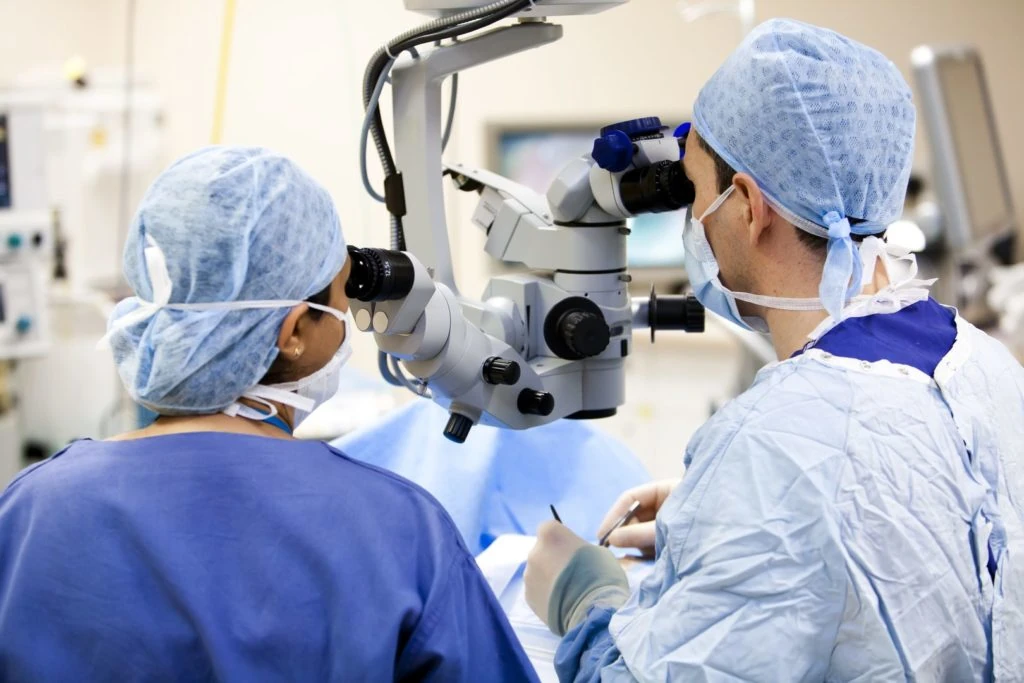
Among contraindications to laser vision correction surgery are mentioned

The larger or more complicated the visual defect, the more difficult it is to select adequate glasses or lenses for the patient’s needs. It’s also worth remembering that not every eye tolerates contact lenses, and in the case of significant vision defects, even the best glasses can distort the image and make it difficult to perform certain activities, such as driving.
The solution is laser vision correction, an increasingly popular operation that restores visual acuity. The rapid development of ophthalmic techniques makes laser eye surgery a procedure that is as safe as possible (the number of complications is less than 1% of cases), painless, and offers the possibility of almost immediate return to normal daily functioning.
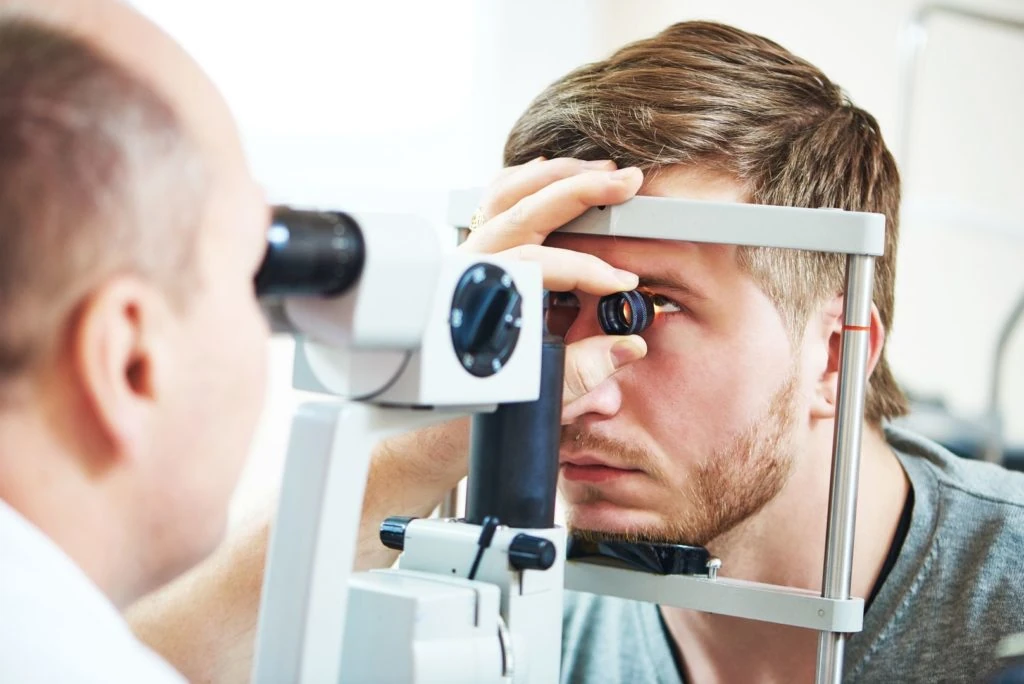
The decision to perform laser vision correction is made only when the defect is stabilized. This type of treatment is not performed on people under 18. year of life, since until then the eye remains in a phase of continuous development, and during adolescence visual defects tend to worsen rapidly and rapidly.
If the defect progressed during the year before laser vision correction, there is a risk that this will also happen after the procedure. Therefore, if our goal is to permanently eliminate the defect, the operation must be performed on an eye with a stabilized defect. We are then assured that the laser correction of the vision defect will be permanent and there will be no need to repeat the operation in the future.
Eyeglasses and contact lenses help correct vision defects. Laser eye surgery can eliminate it.
See how to make an appointment
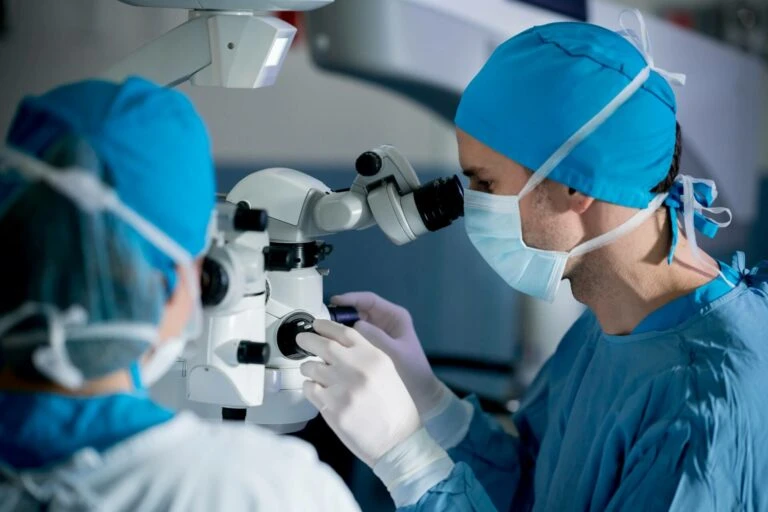
The most common vision impairments undergoing laser correction are nearsightedness, farsightedness, and astigmatism. It should be noted that astigmatism can coexist with both nearsightedness and farsightedness, and even the best-selected glasses or lenses will not be able to guarantee the patient comfortable vision; they will only minimize the worst effects of such a condition.
A visual impairment where the optical system of the eye incorrectly focuses light rays – instead of on the retina, the rays are focused in front of it. As a result, objects that are significantly distant from the eye appear blurry and blurred. Myopic individuals often squint their eyes, trying to change the curvature of the cornea and “adjust the image” through the tension of the eye muscles. Such a procedure only works in the initial phase of the disease. As the defect deepens, optical correction or wearing contact lenses becomes necessary. The greater the myopia, the more reasonable it is to undergo laser vision correction – not only for health reasons but also for aesthetic ones. Eyeglass lenses with an index, i.e., maximally thin, are expensive. Lenses without an index – so thick that they significantly distort the field of view.
Minimally invasive/minimally invasive micro-lens laser vision correction (lens micro-extraction) using the SCHWIND ATOS® femtosecond laser.
The cornea is incised using a scalpel (microkeratome). The goal is to model the surface of the cornea so that it can properly focus the image onto the retina.
Trans-PRK stands for Trans-epithelial PhotoRefractive Keratectomy. Corneal epithelial and dioptric correction is done simultaneously uniquely with the excimer laser.
The procedure involves removing the upper cell layer of the cornea (epithelium) and then properly reshaping the underlying corneal tissue using an excimer laser. The goal of the procedure is to properly model the central surface of the cornea with a laser beam so that it focuses the image precisely on the retinal surface.
Using a precise femtosecond laser, the surgeon makes a cut in the cornea, creating a thin flap 0.1 mm thick – a flap. He uses an excimer laser to reshape the previously exposed cornea for a few seconds, then the flap is closed back up; it attaches and forms a protective corneal barrier.
A visual impairment where the optical system of the eye focuses light rays behind the retina. A farsighted individual sees distant objects well but has difficulty with precise and clear vision of close objects. Hyperopia is not the same as presbyopia (so-called aging farsightedness). The latter, although it presents with the same symptoms and shares many characteristics with hyperopia, only appears after the age of 40 and requires correction using different eyeglass lenses than hyperopia.
The cornea is incised using a scalpel (microkeratome). The goal is to model the surface of the cornea so that it can properly focus the image onto the retina.
Using a precise femtosecond laser, the surgeon makes a cut in the cornea, creating a thin flap 0.1 mm thick – a flap. He uses an excimer laser to reshape the previously exposed cornea for a few seconds, then the flap is closed back up; it attaches and forms a protective corneal barrier.
RLE (refractive lens exchange) or CLE (clear lens extraction), or refractive lens exchange, involves removing the patient’s own lens and replacing it with a technologically advanced artificial lens to correct the visual impairment.
Many patients looking for an alternative to wearing glasses or contact lenses hear in eye doctors’ offices that they do not qualify for laser vision correction surgery.
Presbyopia, also known as aging farsightedness or presbyopia, is not a vision impairment but rather a syndrome of changes that occur with age in the human eye. It is estimated that nearly 10 million Poles struggle with presbyopia, often without realizing it, and consider difficulties reading fine print or seeing clearly in low light as something natural. However, human vision naturally deteriorates after the age of 40 and has nothing to do with any existing vision impairments such as nearsightedness, farsightedness, or astigmatism. Furthermore, presbyopia can also occur in individuals who have never been diagnosed with any vision impairment.
Monovision involves subjecting each eye to a different refractive power correction in order to prepare one eye for long-distance vision and the other for near-distance vision. In short: one short-sighted and one long-sighted eye is artificially created!
It involves laser-based, multi-curvature modeling of the eye’s surface, modeled on refractive algorithms. The resulting new curvature of the cornea allows the patient to see from different distances.
A vision defect whereby the cornea or lens has undergone stretching and distortion. The optical elements of the average eye are symmetrical about its axis. If the eye has greater width than height, instead of focusing light in a circular area on the retina, the lens and cornea will create a blurred image in one direction. An astigmatic person sees unclearly both up close and at a distance. Ophthalmologists and optometrists make various divisions of astigmatism – due to the distorted element of the eye’s optical system (corneal, lenticular, mixed) or due to the mutual arrangement of astigmatic axes (regular – uncompounded, compounded, mixed, simple, inverse, oblique, and irregular). For the patient, astigmatism always means the same thing: a person with astigmatism will see an unclear image in certain areas of the visual field at any distance. It is worth mentioning that in the case of irregular astigmatism, the defect cannot be corrected optically; only contact lenses can be used.
The cornea is incised using a scalpel (microkeratome). The goal is to model the surface of the cornea so that it can properly focus the image onto the retina.
Using a precise femtosecond laser, the surgeon makes a cut in the cornea, creating a thin flap 0.1 mm thick – a flap. He uses an excimer laser to reshape the previously exposed cornea for a few seconds, then the flap is closed back up; it attaches and forms a protective corneal barrier.
As already mentioned, an absolute prerequisite for qualifying for laser eye surgery is stabilization of the defect. This means that one year before the qualification tests are undertaken, the defect should remain stable. Breaking this rule can result in the return and worsening of the vision defect already after laser eye correction. Another consideration for the procedure is the age of the patient. It is assumed that until the age of 18 the eyes should not undergo surgery due to the developmental changes taking place in them, although in justified cases laser vision correction procedures are performed on people who are 18 or older. year of life. As part of the qualifying examination, the ophthalmologist conducts an in-depth interview with the patient to get an idea of whether there are any contraindications to the procedure. It is worth remembering that while there is a lower age limit for a doctor to undertake laser vision correction, there is no upper limit.
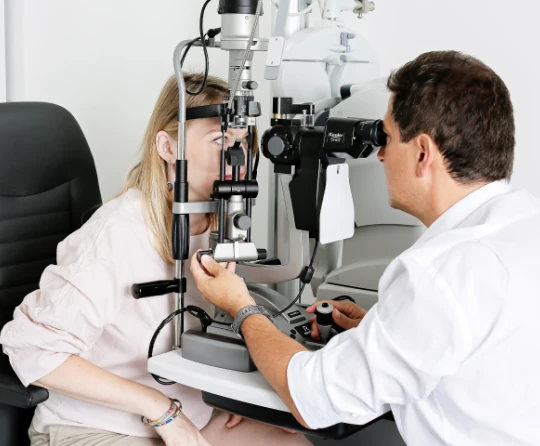
Unfortunately, laser vision correction surgery is not reimbursed by the National Health Service and can only be performed at a private facility. The reason for this is that the National Health Fund treats laser vision correction as a cosmetic procedure. As part of the qualification, we receive:
When the decision is made to choose a particular method of laser eye surgery, we must reckon with the following costs:
Included in the price of each package is a ten-year warranty, which includes free corrections if the stated goal of correction is not achieved (due to the healing process, measurement errors, variation in leserotherapy). Vision correction must be medically safe and performed according to international standards and guidelines. The warranty does not cover eye diseases such as glaucoma or cataracts and progressive presbyopia.
Laser vision correction is performed under local anesthesia in an outpatient setting. Depending on the method chosen, the patient may experience more or less, but short-term discomfort. None of the laser vision correction methods are associated with painful sensations AFTER the operation.
The first phase of the operation always looks the same: it is the precise preparation of the operation area. The patient’s face is washed with a special disinfectant, and his eyes are anesthetized through eye drops. The patient’s eyelids are painlessly immobilized with dilators. Further treatment depends on the method chosen. The management procedures are different in each case, as is the recovery time to normal function and full visual acuity.
After laser eye surgery, there may be pain, which is relieved with ordinary painkillers.
Shortly after FemtoLASIK surgery, patients may notice that they can see more clearly, but their eyes should remain protected for the rest of the day. After FemtoLASIK surgery, patients may experience some discomfort from burning or stinging in the eye. Regeneration of the cornea takes several hours, and the patient can see very clearly the day after the procedure.
In the case of the Trans-PRK smart surFace method, it takes another 4-5 days for the ability to see to recover, and ideal vision is regained after 3-4 months . In a small number of cases, treated patients complain that the healing process is sometimes a bit painful, and some patients also experience a sense of corneal haze/scarring (haze effect). This usually causes a temporary deterioration of vision. Eye drops help in this case for a short time, but this haze is not permanent. It is essential that the patient always attend the follow-up appointment scheduled by the ophthalmologist after the procedure.
With the LASEK/PRK method, the patient notices an improvement in vision, but the eyes should remain protected for the rest of the day. Cell regeneration after surgery takes place in the first 2-3 days and can cause severe pain as the upper layer of the cornea is removed. The pain can be relieved with painkillers. Keep in mind that the quality of vision may still change in the first weeks and months after the procedure.
See how to make an appointment






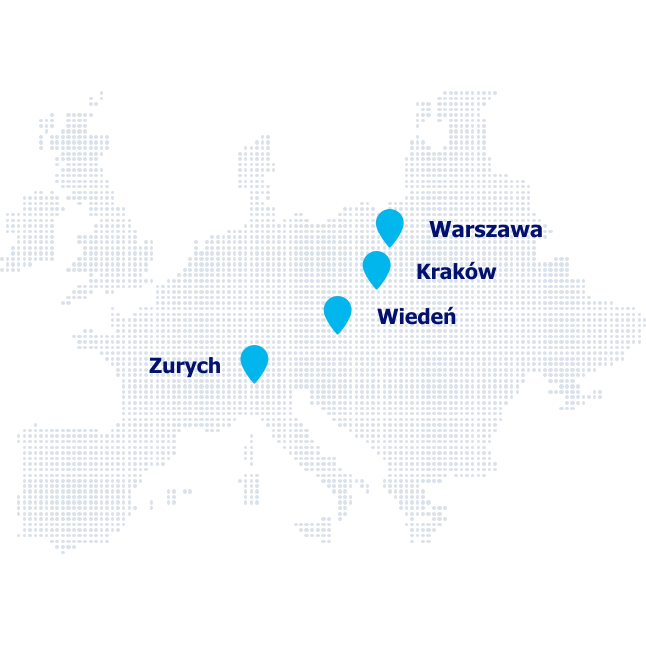

Leading surgeon for SwissLaser, Dr. Victor Derhartuanian, MD from Vienna Medical University, learned his expertise by studying under the laser surgery pioneer, Professor Dr. Thomas Kohnen (University of Clinical Ophthalmology in Frankfurt) and Professor Dr. Theo Seller (Institute IROC in Zurich), who performed the first laser vision correction surgery in history. Today, Dr. Derhartunian uses his priceless knowledge, to become one of the leading surgeons in Europe and is improving laser vision correction to the next level.
See how to make an appointment