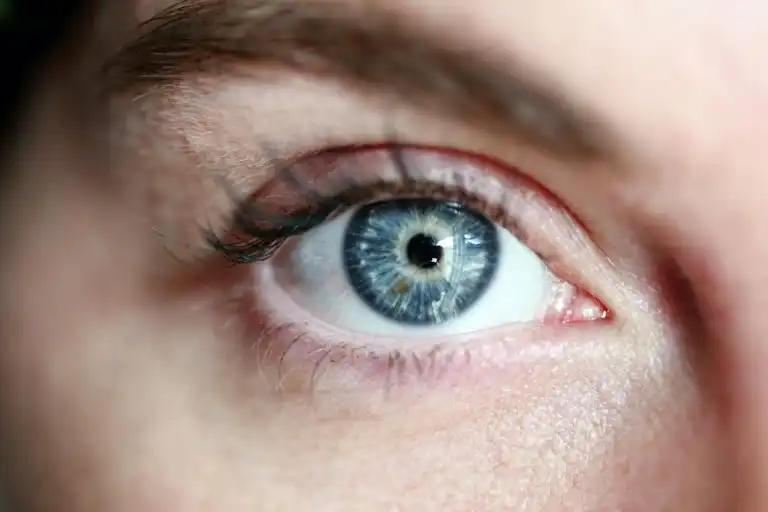
Short-sightedness and farsightedness (hyperopia) are the most common vision defects. Both nearsighted and farsighted people are able to accurately describe what problems they face on a daily basis and name the ailments that are associated with their refractive defects. Difficulties arise when we ask them to describe the causes of the defect, because such a description requires knowledge of the anatomy of the eye and how it functions.
Myopia is a visual defect in which parallel light rays entering the eye are refracted not on the retina, but in front of it. There are the following types of myopia:
- Axial – caused by an eyeball that is too long and enlarges as it lengthens and stretches into the posterior pole of the sclera, choroid and retina. At birth, every child’s eyes have what is known as physiological hyperopia (a beam of light focuses behind the retina), which gradually decreases with the elongation of the eyeball to reach regularity (emmetropization). Sometimes the process of elongation of the eyeball progresses further leading to myopia.
- Lenticular (curvature) – caused by excessive sphericity (convexity) of the lens, its swelling, change in its breaking power.
- Corneal – resulting from excessive corneal sphericity.
Farsightedness (hyperopia) o visual defect consisting in the fact that parallel light rays entering the eye after passing through the optical centers of the eye are refracted not on the retina but behind it. This can be caused by an eyeball that is too short or by too little breaking power of the cornea or lens.
What are the different components of the eyeball responsible for?
The eyeball consists of three membranes: the outer fibrous membrane (sclera and cornea), the middle vascular membrane (iris, ciliary body, choroid) and the inner membrane (retina).
- Sclera – gives shape to the eyeball and protects the inside of the eye; at the front of the sclera is an opening that surrounds the cornea, at the back is an opening that surrounds the optic nerve canal.
- Cornea – is the transparent anterior membrane of the eye. It consists of as many as six layers: the anterior epithelium, the anterior limiting membrane (the so-called Bowman’s layer), the corneal dermis (stroma) which makes up 90% of the corneal thickness, the posterior limiting lamina (Descemet’s membrane) and the endothelium. Between the cornea’s dermis and posterior border lamina is the Duy layer – it is only 15 micrometers thick, really hard and tough (it is not intimidated by pressures of 1.5-2 bars). It is through the cornea that light enters the eye.
- The iris – is responsible for the color of the eyes, it is in it that there is an opening called the pupil, the width of which varies depending on the intensity of light.
- Choroid – is located between the sclera and the retina. It is made up of numerous blood vessels and lining the entire chamber of the vitreous body. It supplies the outer part of the retina with oxygen and nutrients.
- Lens – has the ability to change shape, so it can decrease or increase its optical power. This mechanism is called accommodation. It enables sharp vision of objects at different distances from the eye.
- Retina – has a very complex structure – it is as many as 10 layers, among which there is a layer of pigment epithelial cells, photoreceptor cells (rods – responsible for twilight vision, and cones – responsible for daytime vision and color recognition) and nerve and glial cells. The rods and cones contain visual pigments, which break down when exposed to light, causing the light stimulus to turn into a nerve stimulus that flows through the visual pathway to the brain.
As you can see, short-sightedness and farsightedness are related to anatomical defects in the structure of the eyeball. Defectively constructed cornea or lens can also be the cause of astigmatism – it consists in the fact that the optical system of the eye is not able to focus light rays correctly on the retina. Parallel light rays are refracted in two different planes (e.g., vertical and horizontal), resulting in out-of-focus images, crooked and wavy images, and poor contrast.
Both nearsightedness and farsightedness and astigmatism can be corrected by laser. See if you qualify for such treatment.